Waterproof Windows vs Standard Windows: Performance Comparison
Waterproof windows offer better sealing, rain protection, durability, insulation, and low maintenance than standard windows, making them ideal for long-term comfort in modern homes and offices today.
Common aluminium window types include casement, sliding, fixed (picture), tilt and turn, bi-fold, slide and fold, and louvred windows — each suited to different ventilation, space, and design needs. Casement and louvred styles maximise airflow, sliding and fixed windows save space and light, while bi-fold and tilt-and-turn suit premium, entertaining, or high-security spaces.
Waterproof Windows vs Standard Windows
Windows are no longer just openings for light and air. In modern homes, they play a direct role in comfort, safety, energy efficiency, noise control, maintenance, and long-term protection from weather. This is why many homeowners today compare waterproof windows with standard windows before finalising a new build or renovation.
But before comparing both, it is important to understand one thing clearly: no window should be treated as “waterproof” in isolation. A high-performance window becomes water-resistant or weatherproof because of its complete system — frame material, gasket quality, drainage design, glass sealing, hardware, wall joint sealing, and installation accuracy.
A standard window may look similar from the outside, but the difference becomes clear during heavy rain, strong wind, dust exposure, humidity, and years of daily use.
What Are Waterproof Windows?
Waterproof windows are better described as weatherproof or water-resistant window systems. They are designed to reduce rainwater entry, control seepage, prevent moisture-related damage, and maintain indoor comfort during changing weather conditions.
These windows usually include stronger frame profiles, better sealing, durable gaskets, proper drainage tracks, corrosion-resistant hardware, and precision installation. In uPVC and premium aluminium systems, the design is engineered to handle rain, dust, heat, and daily usage better than traditional window options.
The goal is not only to block water. The goal is to protect interiors, reduce maintenance, improve comfort, and make the window perform consistently over many years.
What Are Standard Windows?
Standard windows are basic window systems that may provide ventilation, light, and simple protection from outdoor conditions. They can be made from wood, mild steel, basic aluminium, or low-grade fabricated frames.
These windows may work well in mild conditions, but they often struggle when exposed to heavy rain, wind pressure, heat, dust, humidity, and poor maintenance. The common problems include water seepage, frame swelling, rusting, loose joints, poor sealing, rattling, dust entry, and higher maintenance.
The biggest issue with standard windows is not always visible on day one. Many problems appear slowly after one or two seasons of rain, heat, and daily use.
Waterproof Windows vs Standard Windows: Comparison Table
Comparison Point | Waterproof / Weatherproof Windows | Standard Windows |
Rain Protection | Designed to reduce rainwater seepage with better sealing and drainage systems. | May allow water leakage during heavy rain or wind-driven rain. |
Frame Material | Usually made with durable uPVC or premium aluminium systems. | Often made with basic aluminium, wood, steel, or low-grade frames. |
Sealing Quality | Uses gaskets, tight joints, and precision locking for better closure. | May have gaps around the frame, sash, or corners. |
Drainage System | Includes drainage tracks or weep holes to let collected water escape. | Poor or no drainage can cause water collection in tracks. |
Durability | Resistant to moisture, rust, termites, and weather damage. | More prone to rusting, swelling, warping, or frame damage. |
Maintenance | Requires low maintenance with simple cleaning of glass, frame, and tracks. | May need repainting, polishing, rust treatment, or frequent repairs. |
Dust & Noise Control | Better sealing helps reduce dust entry and outside noise. | Small gaps may allow dust, insects, and noise to enter. |
Energy Efficiency | Helps maintain indoor comfort by reducing air leakage and heat transfer. | Poor sealing can increase heat entry and reduce cooling efficiency. |
Performance in Monsoon | More suitable for homes exposed to heavy rain and humidity. | May struggle during monsoon, especially if installation is weak. |
Long-Term Value | Higher initial investment but better performance and lower repair needs. | Lower initial cost but may lead to more maintenance and repair expenses. |
Best For | Modern homes, villas, apartments, offices, balconies, and exposed elevations. | Basic spaces with limited weather exposure or temporary use. |
Waterproof Windows vs Standard Windows: Key Performance Comparison
1. Rainwater Protection
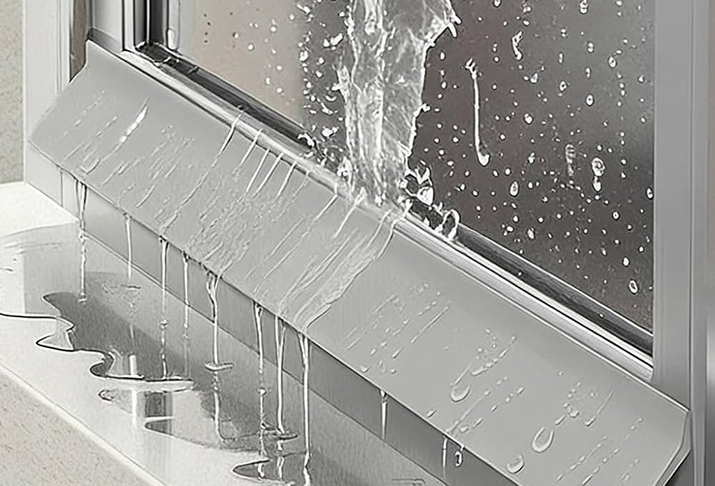
Water-resistant windows are designed to manage rain more effectively. Good uPVC and aluminium systems include tight frame joints, weather seals, gaskets, and drainage channels that help direct water away from the room.
Standard windows may depend only on basic frame fitting and external sealant. If the sealant cracks or the frame shifts, water can enter through corners, sill areas, or wall gaps. During heavy rain, this can lead to damp walls, damaged paint, swollen furniture, and mould-prone corners.
This is why rainwater protection should be judged as a complete system, not just by the frame material.
2. Sealing and Air Tightness
A high-performance window is built to close tightly. Better sealing helps reduce water entry, dust movement, outside noise, and hot air transfer. This is useful for homes near busy roads, open plots, high-rise areas, or exposed balconies.
Standard windows often leave small gaps between the sash and frame. These gaps may not look serious, but over time they allow dust, rain spray, insects, and outside noise to enter. A poorly sealed window can also make indoor cooling less effective.
For better performance, check the gasket quality, locking points, frame alignment, and installation finish before choosing a window.
3. Drainage Design
One of the biggest differences between waterproof windows and standard windows is drainage. Good window systems are designed with tracks and weep holes that allow collected rainwater to move out instead of staying inside the frame.
In standard windows, water may collect in the sill area or track because the drainage path is not designed properly. If water remains trapped, it can cause leakage, staining, rust, odour, or long-term deterioration.
Even in premium windows, drainage holes must be kept clean. Dust and debris can block the outlet and reduce performance. A good window supplier should explain how the drainage system works and how to maintain it before monsoon season.
4. Material Durability
uPVC and aluminium windows are preferred in modern construction because they perform better against moisture compared to traditional wood or mild steel frames.
uPVC does not rot, rust, or attract termites. It also requires very little maintenance. Aluminium offers strength, slim profiles, and durability, especially for larger openings and premium elevations.
Standard wooden windows can expand, warp, or decay when exposed to moisture. Steel frames can rust if the coating fails. Low-quality aluminium may corrode or lose finish over time if fabrication and coating quality are poor.
The right material choice depends on the space, exposure, design requirement, and budget.
5. Performance During Wind-Driven Rain
Rain does not always fall straight. During storms or strong winds, rain can hit windows at an angle. This is where standard windows often fail because the water pressure reaches corners, joints, and track gaps.
Water-resistant windows are better prepared for such conditions when they have proper gasket compression, frame depth, locking pressure, and drainage. Casement windows usually offer stronger sealing because they close firmly against the frame. Sliding windows can also perform well if the track system, wool pile, drainage holes, and installation are done properly.
For exposed sides of a home, the window type should be selected carefully instead of choosing only based on appearance.
6. Energy Efficiency and Indoor Comfort
A window that blocks water well usually performs better in other areas too. Better sealing reduces unwanted air movement, which helps maintain indoor temperature. With suitable glass options, uPVC and aluminium windows can also reduce heat transfer and improve energy efficiency.
Standard windows with gaps and poor sealing allow hot air, dust, and outside noise to enter easily. This can make rooms less comfortable and increase dependence on air conditioning.
For homes in warm regions, energy efficiency should be considered along with rain protection. A good window should help the home feel cooler, quieter, and cleaner.
7. Noise and Dust Control
Waterproof or weatherproof window systems are not only useful during rain. Their sealing quality also helps reduce dust and outdoor noise. This matters for homes near roads, schools, construction areas, commercial streets, or apartment corridors.
Standard windows may allow continuous dust entry through small gaps. Over time, this creates more cleaning work and affects indoor comfort.
If noise reduction is a priority, homeowners should ask about glass thickness, laminated glass options, double-glazing, gasket quality, and locking systems.
8. Maintenance Requirement
Standard windows often need regular repainting, polishing, rust treatment, sealant repair, or hardware adjustment. Wooden frames require more care in humid conditions, while steel frames need protection from rust.
uPVC and aluminium windows are easier to maintain. In most cases, regular cleaning of frames, glass, tracks, and drainage holes is enough. Hardware and locks should also be checked periodically for smooth operation.
Low maintenance does not mean no maintenance. The best results come from correct installation and simple routine care.
9. Long-Term Cost
Standard windows may look cheaper at the beginning, but the long-term cost can increase through repairs, repainting, leakage correction, wall damage, hardware replacement, and discomfort.
Water-resistant uPVC or aluminium windows may require a better initial investment, but they offer stronger long-term value when selected and installed correctly. They reduce repeated maintenance and improve the overall living experience.
When comparing prices, do not compare only per-square-foot rates. Compare frame quality, glass type, hardware, gasket, drainage design, installation process, warranty, and after-sales support.
Which One Should You Choose?
Choose standard windows only if the space has low weather exposure, temporary use, or very basic requirements.
Choose water-resistant uPVC or aluminium windows if you want better protection from rain, lower maintenance, improved comfort, cleaner interiors, noise reduction, and long-term durability.
For bedrooms, living rooms, balconies, villas, high-rise apartments, office spaces, and exposed elevations, high-performance windows are usually the smarter choice.
What to Check Before Buying
Before finalising a supplier, ask these questions:
- Does the window have proper weather sealing?
- What gasket material is used?
- How does the drainage system work?
- Is the window suitable for the direction and exposure of my home?
- What glass options are available?
- Will the supplier inspect the site before quoting?
- Is the installation handled by trained professionals?
- Is there a clear warranty for product and installation?
These questions help you compare window suppliers more accurately and avoid choosing based only on price.
Final Thoughts
The difference between waterproof windows and standard windows is not just about rain. It is about total performance.
A good window should protect your home from water, dust, heat, noise, corrosion, and daily wear. It should open smoothly, close tightly, look good, and continue performing across seasons.
For homeowners comparing Windows Suppliers Hyderabad, the best choice is not always the cheapest window or the most expensive one. The best choice is the window system that matches your home’s climate exposure, design needs, usage pattern, and long-term comfort goals.
Windoorkrafts offers premium uPVC and aluminium window solutions designed for modern homes and commercial spaces. If you are planning a new project or replacing old windows, speak to a window specialist and compare the right system before making a decision.