The Advantages of uPVC Ventilator Profiles for Modern Homes
uPVC ventilator profiles improve airflow, reduce humidity, block dust and rain, and support better indoor comfort. They are durable, low-maintenance, energy-efficient, and ideal for modern Hyderabad homes.
Introduction
Good ventilation is one of those things you only notice when it’s missing. Stuffy rooms, moisture buildup, poor air circulation — these are everyday problems in homes where the ventilation design hasn’t kept pace with modern living demands.
uPVC ventilator profiles have quietly become one of the most practical answers to this challenge. They sit at the intersection of airflow management, thermal efficiency, and low-maintenance durability — making them a smart addition to any modern home, whether in new construction or renovation.
This blog breaks down what uPVC ventilator profiles actually are, how they work, and why more homeowners and builders are choosing them as the standard rather than the exception.
Quick Answer
uPVC ventilator profiles are specially designed window and door frame components that allow controlled airflow into a space while blocking heat, dust, rain, and noise. They combine the insulation benefits of uPVC with built-in ventilation functionality — helping maintain fresh, comfortable indoor air without compromising energy efficiency.
What Are uPVC Ventilator Profiles?
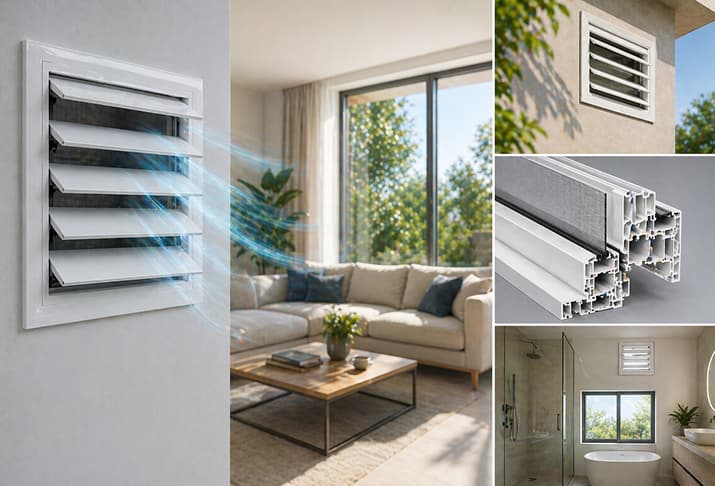
A ventilator profile is a framing system — typically integrated into windows or fixed wall openings — that allows air to pass through in a controlled way. Unlike simply opening a window, ventilator profiles are designed to permit airflow even when the window is closed or partially open, often through built-in mesh channels, louvred sections, or trickle vents.
The uPVC version of these profiles brings all the material advantages of Unplasticised Polyvinyl Chloride to ventilation: low thermal conductivity, UV resistance, weather sealing, and long-term dimensional stability.
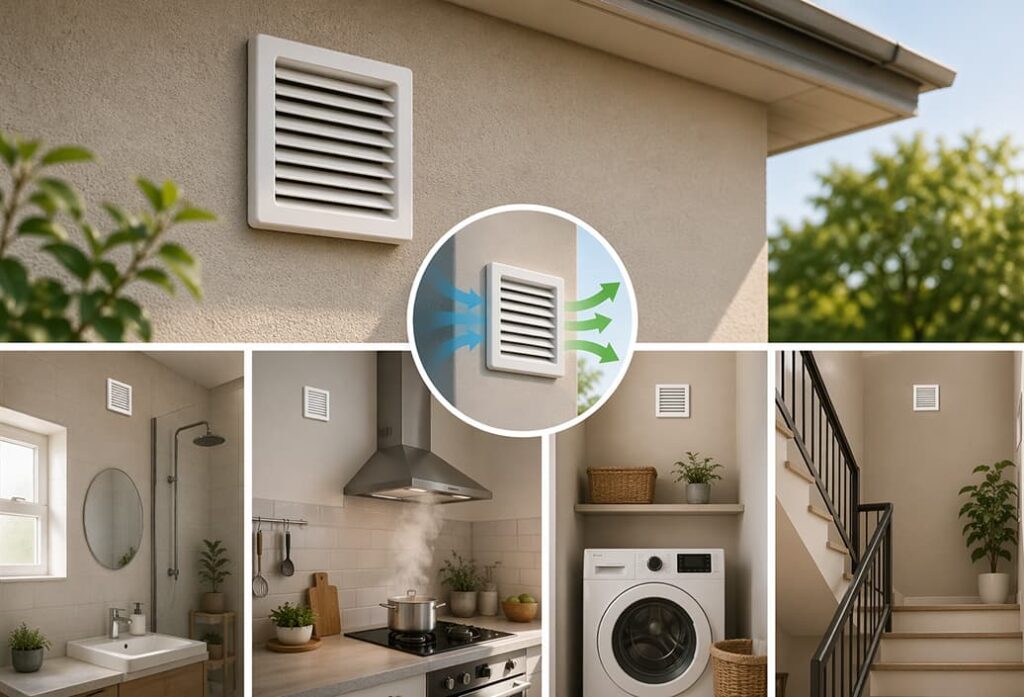
They are used in residential windows, bathroom openings, kitchen exhausts, corridor grilles, and commercial building facades — anywhere controlled passive ventilation is needed without sacrificing insulation or structural integrity.
Key Advantages of uPVC Ventilator Profiles
Controlled airflow Allows fresh air circulation without fully opening windows — ideal for security and weather control.
Thermal efficiency Multi-chamber uPVC frames limit heat gain or loss while still permitting ventilation.
Moisture management Reduces condensation and humidity buildup that causes mould and structural damage.
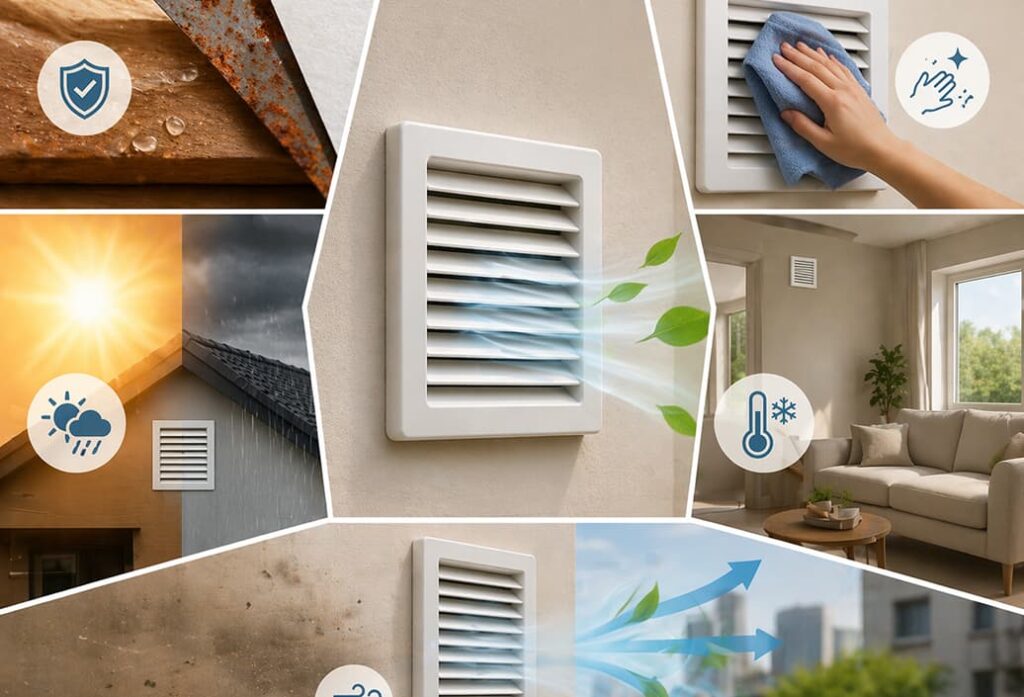
Weather resistance Designed to allow airflow while blocking rain, dust, and insects from entering.
Near-zero maintenance No painting, treating, or seasonal upkeep — just occasional cleaning.
Long service life uPVC doesn’t rust, rot, or warp — profiles retain function and appearance for decades.
How uPVC Ventilator Profiles Improve Indoor Air Quality
Most homes today are built tighter than ever — better insulation, sealed windows, and draught-proofing all help with energy efficiency, but they also trap stale air, moisture, and pollutants inside. Without adequate ventilation, indoor air quality can actually be worse than outdoors.
uPVC ventilator profiles solve this by enabling passive ventilation — a constant, low-level exchange of air that doesn’t require mechanical systems or open windows. Fresh air enters through the profile’s ventilation channel, stale air exits, and the indoor environment stays healthier without the homeowner needing to do anything.
In kitchens and bathrooms especially, this makes a measurable difference. These are spaces where moisture accumulates quickly. A well-placed ventilator profile keeps humidity under control, reducing the conditions that lead to mould growth and surface deterioration.
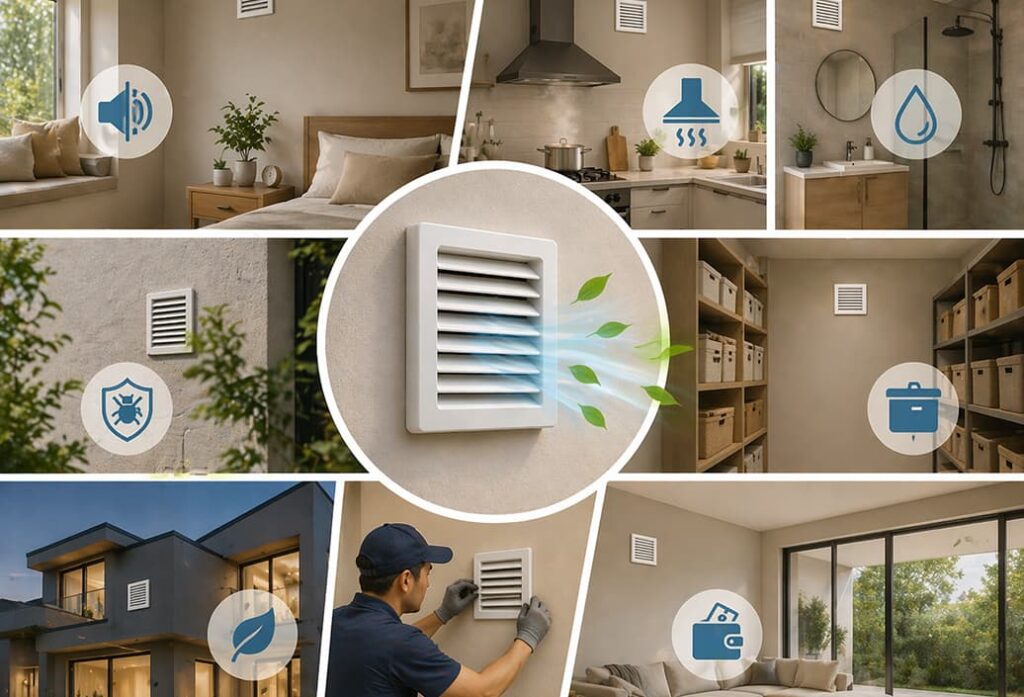
Where uPVC Ventilator Profiles Are Most Effective
Bedrooms Maintains overnight air quality without noise or security compromise from open windows.
Kitchens Handles cooking fumes, steam, and odours through passive exhaust ventilation.
Bathrooms Reduces moisture and condensation that causes mould on walls and ceilings.
Commercial spaces Offices, retail, and corridors benefit from consistent passive airflow.
Stairwells Improves air circulation in enclosed vertical spaces that lack natural cross-ventilation.
Garages and basements Prevents fume buildup and moisture in below-grade or enclosed utility spaces.
Common Questions About uPVC Ventilator Profiles
Do ventilator profiles let in rain or dust?
No — quality uPVC ventilator profiles include mesh inserts, rain deflectors, and directional louvres that allow air to pass through while physically blocking water droplets, dust particles, and insects. The airflow channel is designed with geometry that redirects wind-driven rain away from the opening.
Can ventilator profiles be used with double-glazed windows?
Yes. In fact, they are most commonly paired with double-glazed sealed units. The glazing handles thermal insulation while the ventilator profile handles air exchange — together they achieve both energy efficiency and adequate ventilation without compromise.
Will a ventilator profile affect the thermal performance of my windows?
Slightly, in that any airflow opening allows some heat exchange. However, trickle ventilators and slot vents are engineered to keep this exchange minimal. The improvement in indoor air quality — and the reduction in moisture-related damage — typically outweighs this small thermal trade-off.
Are uPVC ventilator profiles suitable for Hyderabad’s climate?
Yes — Hyderabad’s combination of dry heat, dusty conditions, and seasonal humidity makes ventilator profiles particularly useful. They allow airflow during cooler parts of the day while the dust mesh keeps particulates out, and the uPVC frame handles the temperature and humidity cycling without warping or corroding.
How do I clean a uPVC ventilator profile?
The mesh insert can usually be removed and rinsed under water to clear dust and debris. The frame itself cleans with a damp cloth and mild detergent. No special treatments, chemicals, or tools are needed. In dusty urban environments, a light clean every few months keeps the airflow channel fully functional.
uPVC vs Other Ventilator Frame Materials
Aluminium ventilator frames
Aluminium conducts heat well — which is useful in some industrial settings but a disadvantage in homes where you want to keep heat out. Aluminium ventilator frames can also develop condensation on the interior surface in humid conditions, and they require periodic treatment to prevent surface oxidation.
Wooden ventilator frames
Wood offers good natural insulation but swells and shrinks with humidity changes — directly relevant for ventilator openings that need to maintain a consistent gap size. In a bathroom or kitchen environment, untreated wood deteriorates quickly. Treated wood requires regular upkeep.
uPVC ventilator frames
uPVC avoids the thermal conductivity problem of aluminium and the moisture sensitivity of wood. It maintains its shape and dimensions regardless of humidity, needs no surface treatment, and is resistant to the UV degradation that affects untreated materials over time.
Common Myths About Ventilator Profiles
Myth: Ventilator profiles are only for older buildings Modern buildings benefit just as much — in fact, newer construction with better sealing needs dedicated ventilation pathways more than older, naturally draughty buildings do.
Myth: They are just decorative grilles with no real function Quality ventilator profiles are engineered components with specific airflow rates, weather resistance ratings, and acoustic performance specifications — far beyond a decorative function.
Myth: Opening a window is the same thing An open window creates uncontrolled airflow, no weather protection, and a security gap. A ventilator profile delivers measured, weather-protected airflow even when the window is fully closed.
Myth: They are difficult to integrate into existing windows Many uPVC ventilator profiles are designed as retrofit additions — they can be fitted into existing window frames without full replacement, making them accessible for renovation projects.
What to Check Before Choosing uPVC Ventilator Profiles
- Airflow rating: Check the profile’s ventilation rate (often measured in litres per second) to ensure it meets the requirements of the room it’s serving.
- Mesh quality: A fine stainless steel or fibreglass mesh blocks insects and dust effectively without restricting airflow.
- Weather sealing: Look for profiles with rain deflectors or angled louvres designed to prevent water ingress under wind pressure.
- Acoustic performance: In noisy environments, some ventilator profiles include acoustic baffles that reduce sound transmission through the ventilation channel.
- UV stabilisation: Ensure the uPVC contains UV inhibitors — especially important for profiles in direct sun exposure.
- Compatibility with your window system: Confirm the profile is designed to work with your existing or planned window frame dimensions and opening type.
Long-Term Benefits for Modern Homes
The case for uPVC ventilator profiles goes beyond immediate comfort. Over the long term, controlled passive ventilation reduces the load on mechanical HVAC systems, lowering energy consumption. It also protects the building structure — walls, ceilings, and finishes — from the moisture damage that accumulates when homes are inadequately ventilated.
For homeowners in cities like Hyderabad, where temperature swings between seasons are significant and dust is a constant concern, having a ventilation solution that works passively — without fans, filters, or power — is genuinely valuable. The uPVC frame ensures this solution remains functional and looking good for decades without asking for much in return.
Final Thought
Ventilation is one of the most overlooked aspects of home design — and one of the most consequential for daily comfort, health, and long-term building performance. uPVC ventilator profiles offer a quiet, low-maintenance, and highly effective way to manage airflow without giving up insulation, weather protection, or security.
For homeowners and builders across Hyderabad looking for window and door solutions that think beyond the frame, WindoorKrafts brings together quality uPVC systems — including ventilator profiles — designed for the specific demands of the local climate. Their approach combines the right materials with proper installation to deliver results that hold up year after year.
Fresh air and thermal comfort don’t have to be a trade-off. With the right uPVC ventilator profile, you get both.
Your Questions, Answered
1. What are uPVC ventilator profiles?
uPVC ventilator profiles are frame components that allow controlled airflow while helping block dust, rain, insects, and heat.
2. Are uPVC ventilator profiles suitable for Hyderabad homes?
Yes, they are ideal for Hyderabad’s heat, dust, and seasonal humidity because they improve ventilation without rusting, warping, or corroding.
3. Do uPVC ventilator profiles require high maintenance?
No, they need only occasional cleaning with a damp cloth, mild detergent, and simple mesh cleaning.
4. How do uPVC ventilator profiles improve indoor air quality?
They support passive ventilation by allowing fresh air in and helping stale air, moisture, and odours move out.
5. Where can uPVC ventilator profiles be used?
They can be used in bedrooms, kitchens, bathrooms, stairwells, garages, basements, and commercial spaces.