Aluminium vs uPVC Sliding Doors: Which One Is Better for Your Home?
Aluminium and uPVC sliding doors both suit modern homes, but aluminium offers better strength, slim frames, premium looks, and longer life, while uPVC is more affordable, low-maintenance, and good for insulation in smaller spaces.
Aluminium sliding doors are better for large openings, balconies, villas and modern designs, because they are stronger, have slimmer frames, hold bigger glass panels and come in more finishes. uPVC sliding doors are better for insulation, noise reduction and budget-friendly homes, especially apartments near busy roads. In Hyderabad, both perform well when you choose quality profiles: UV-stabilised uPVC or powder-coated, thermally broken aluminium. The right choice depends on your opening size, noise level, sun exposure, design style and budget.
Most comparisons stop at “aluminium is strong, uPVC is insulated.” That’s true, but it doesn’t help you choose. What really matters is how each material performs in Hyderabad’s heat and monsoons, on your specific balcony or living room opening, and within your budget.
This guide compares aluminium and uPVC sliding doors on every factor that matters, so you can choose with confidence.
What Are Aluminium Sliding Doors?
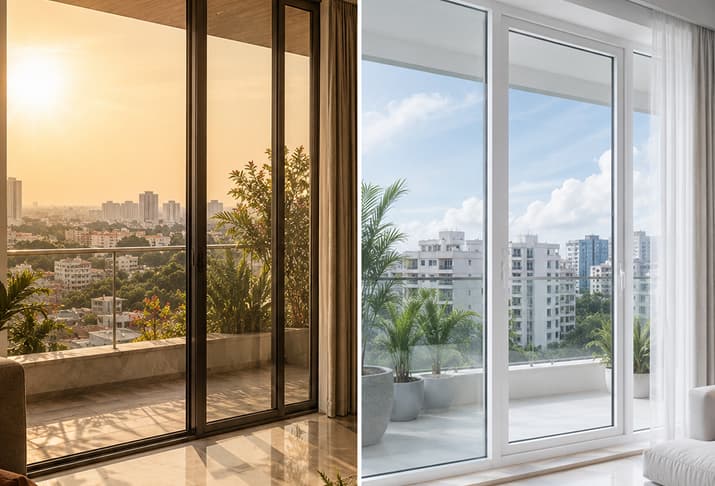
Aluminium sliding doors use strong, lightweight aluminium frame profiles that can support large glass panels with slim frames. Because aluminium is so strong, the frames take up less space, giving you more glass and a wider view.
Key features:
- Slim, minimal frames with a premium look
- Supports wide openings and large single glass panels
- Rust-resistant and very durable
- Powder-coated finishes in black, grey, bronze, champagne and wood tones
- Ideal for balconies, terraces, villas and commercial spaces
Explore more styles in our guide on types of aluminium windows.
What Are uPVC Sliding Doors?
uPVC sliding doors are made from unplasticised polyvinyl chloride, a rigid, durable material reinforced internally with galvanised steel. uPVC is known for strong heat and sound insulation, low maintenance and affordable pricing.
Key features:
- Multi-chambered profiles that naturally insulate against heat and noise
- Termite-proof, rust-proof and water-resistant
- Low maintenance with no painting needed
- Available in white, cream and wood-grain finishes
- Ideal for apartments, compact balconies and noise-sensitive rooms
Learn more about the benefits of uPVC windows and doors.
Aluminium vs uPVC Sliding Doors: Comparison
| Factor | Aluminium Sliding Doors | uPVC Sliding Doors |
|---|---|---|
| Strength | Very high | Good (steel-reinforced) |
| Frame look | Slim and premium | Wider and simple |
| Best for | Large openings, villas, balconies | Apartments, smaller openings |
| Heat insulation | Good with thermal break + DGU | Naturally excellent |
| Noise reduction | Good with acoustic glass | Naturally better |
| Colour options | Wide range of powder coats | Limited (white, cream, wood-grain) |
| Maintenance | Very low | Low |
| Lifespan | 30+ years | 20–25 years |
| Cost | Moderate to premium | Budget to moderate |
| Recyclability | Fully recyclable | Recyclable, less infrastructure in India |
Which Material Handles Hyderabad’s Heat and Monsoon Better?
Both materials perform well in Hyderabad when you choose high-quality profiles; low-grade versions of either are the real risk.
Hyderabad summers often cross 40°C, and monsoons bring sudden heavy rain with strong winds.
- Aluminium, when powder-coated and paired with a thermal break (such as AluK systems), resists warping under prolonged heat and does not swell or contract.
- uPVC, when made with UV-stabilised, multi-chambered profiles (such as ENCRAFT systems), resists yellowing and brittleness, even after years of strong sun.
For monsoon performance, sealing and drainage matter more than the material. Read our guides on best windows and doors for monsoon-prone areas in Hyderabad and how uPVC doors help keep your home cooler.
Is Aluminium More Expensive Than uPVC?
Yes. Aluminium sliding doors usually cost more upfront than uPVC, because they use higher-grade extrusions, stronger hardware and premium finishes.
The final price for either material depends on:
- Opening size and number of panels
- Glass type (plain, toughened, laminated or double-glazed)
- Track and roller hardware
- Frame colour and finish
- Installation conditions
Upfront cost is not the whole story. Aluminium’s longer lifespan and premium finish can make it better long-term value, especially for large openings. uPVC delivers excellent performance at a lower starting price and is ideal when budgets are tighter.
For more on pricing, see our guide on uPVC sliding window installation cost in Hyderabad.
Does the Right Material Change for Balconies vs Living Rooms?
Yes. The best material often depends on where the door goes, not just your home’s overall style.
- Balconies and terraces: Aluminium is usually the better fit. Slim frames and large panes give unobstructed views and smooth operation on wide openings. This is popular in high-rise apartments across Kondapur, Gachibowli, Manikonda and Kokapet.
- Living rooms facing roads: uPVC works well where insulation and quiet matter more than ultra-slim frames.
- Garden-facing living rooms in villas: Aluminium for wide, floor-to-ceiling glass and indoor-outdoor flow.
- Bedroom balconies: uPVC for better heat control and quieter sleep.
For full-home planning, read our guide on how to choose the right windows for villas.
Which Is Easier to Maintain in Hyderabad’s Dust and Humidity?
Both are low-maintenance, but they need slightly different care.
- Aluminium needs only periodic wiping. Its powder coating resists corrosion and does not peel.
- uPVC is easy to clean, but sliding tracks can collect dust faster. Vacuum or wipe the tracks every few weeks for a smooth glide.
Neither material needs painting or polishing, unlike wood. If your sliding doors feel stiff during rains, read why sliding windows are hard to open during the rainy season. For complete care tips, follow our guide on how to care for your uPVC and aluminium windows.
Which Looks Better: Aluminium or uPVC?
Aluminium suits modern, glass-heavy designs, while uPVC blends well with classic and traditional homes.
- Aluminium works best for contemporary apartments, gated communities and modern villas. Its slim, minimal frames blend into the architecture and offer more colour choices.
- uPVC suits independent houses and traditional elevations, especially in wood-grain or classic white finishes that match existing windows and doors.
For design inspiration, see 5 trendy window designs to elevate your living room.
Which Is More Eco-Friendly?
Aluminium currently has the edge, because it can be recycled repeatedly without losing quality and India’s aluminium recycling network is well established.
Modern uPVC is lead-free and recyclable, though its recycling infrastructure in India is still growing. Both last far longer than wood or low-grade steel, which reduces replacement waste.
So, Which Sliding Door Should You Choose?
Choose aluminium if you want:
- Large openings or floor-to-ceiling glass
- Slim, premium frames and more colour options
- Maximum strength and the longest lifespan
Choose uPVC if you want:
- Better natural heat and noise insulation
- A budget-friendly option
- Doors for apartments, compact balconies or road-facing rooms
Many homes use both: aluminium for the main living room or balcony, and uPVC for bedrooms. For a broader comparison, read uPVC windows vs aluminium windows and sliding vs casement doors.
Get the Right Sliding Doors for Your Home with WindoorKrafts
There is no single “better” material for every home. The right sliding door depends on your opening size, sun exposure, noise level, design and budget. That’s why expert advice and a proper site assessment make all the difference.
Why homeowners and architects choose WindoorKrafts:
- ✅ 10+ years of experience with uPVC and aluminium sliding doors across Hyderabad
- ✅ AluK aluminium profiles and ENCRAFT uPVC systems, both under one roof
- ✅ Honest recommendations based on your site, not on what’s easier to sell
- ✅ Toughened, laminated and double-glazed glass options
- ✅ Premium finishes, including black, grey, bronze and wood-grain
- ✅ In-house fabrication at our Pragathi Nagar factory
- ✅ Free site visit and itemised quote with no hidden costs
- ✅ Expert installation with full weather sealing
Ready to choose your sliding doors? Explore our uPVC and aluminium product range, see our work on the projects page, or book your free site assessment today.
📞 Call: +91 99123 15206 | +91 90300 07522
📧 Email: info@windoorkrafts.com
📍 Visit: Road No. 8, ALEAP Industrial Area, Pragathi Nagar, Hyderabad – 500090
Choose with confidence, not guesswork. Talk to WindoorKrafts today.