Do Sliding Windows Leak During Monsoon? Causes & Prevention
Sliding windows may leak during monsoon due to blocked tracks, weak seals, poor drainage or incorrect installation. Proper maintenance and quality fitting help keep your home dry and protected.
Sliding windows can leak during monsoon if the tracks are blocked, drainage holes are clogged, seals are weak, frames are misaligned, or installation is not done correctly. A well-designed and properly installed sliding window should manage rainwater through drainage channels and tight weather sealing.
The good news is that most sliding window leaks are preventable with the right window system, proper fitting, and timely maintenance before the rainy season begins.
What Are Sliding Window Leaks?
Sliding window leaks happen when rainwater enters the indoor space through the window frame, track, corners, glass edges, or wall joints. In most cases, the leak does not come through the glass itself. It usually comes from gaps in the window system or from water that cannot drain out properly.
Sliding windows have tracks that allow the shutter to move horizontally. During rain, some water may enter the outer track. A good window system is designed to collect that water and drain it outside. But when the drainage path is blocked or the window is poorly installed, water can overflow into the room.
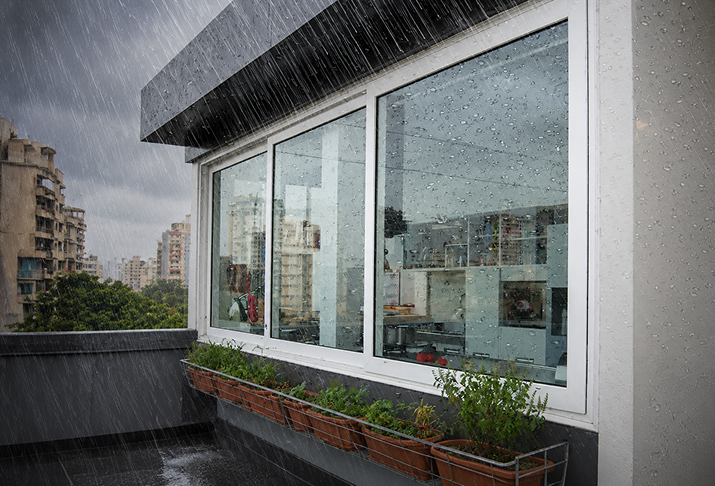
Why Do Sliding Windows Leak During Monsoon?
Sliding windows leak during monsoon mainly because heavy rain, wind pressure, and dust expose weak points in the window system. Hyderabad’s weather can be especially challenging because sudden rain is often accompanied by strong wind and dust buildup.
When wind pushes rainwater against the window, water can enter through small gaps that may not be visible during normal weather. If the frame is loose, the rubber gasket is damaged, or the window track is filled with dust, the water may collect instead of draining outward.
In high-rise apartments, leakage can be more noticeable because wind pressure is stronger on upper floors. In villas and independent houses, large openings and exposed walls may face more direct rain impact.
How Do Sliding Windows Handle Rainwater?
Sliding windows handle rainwater through a track and drainage system. When rain hits the glass and frame, water may move down into the outer channel. From there, drainage holes guide the water outside.
This system works only when three things are correct: the frame should be properly designed, the drainage holes should be open, and the window should be installed with the right slope. If any of these fail, water may remain inside the track and eventually flow indoors.
For example, if the drainage holes are blocked by dust, paint, cement, or insects, water will collect in the track. If the sill slopes inward instead of outward, water naturally moves toward the room. If the frame is not aligned, small gaps can allow wind-driven rain to enter.
What Are the Common Causes of Sliding Window Leakage?
The most common causes of sliding window leakage are poor drainage, weak sealing, damaged gaskets, incorrect installation, and low-quality window profiles.
Blocked drainage is one of the biggest reasons. Hyderabad homes often collect dust quickly, especially near roads and construction areas. This dust settles in the track and blocks water outlets.
Another common cause is worn-out rubber seals. Over time, seals can become loose, hard, or cracked. Once this happens, the window no longer closes tightly.
Poor installation is also a major issue. If the frame is not level, if the wall gap is not sealed properly, or if the sill slope is wrong, water may enter even if the window material is good.
Low-quality hardware can also create problems. Weak locks may not pull the shutter tightly into position, allowing small gaps during heavy wind.
Are Sliding Windows Bad for Monsoon?
No, sliding windows are not bad for monsoon when they are designed and installed correctly. They are popular because they save space, look clean, and work well for apartments, balconies, bedrooms, and living rooms.
The problem is not the sliding design itself. The problem usually comes from poor quality, wrong installation, blocked tracks, or lack of maintenance.
A good sliding window should include strong frames, proper interlocking, quality gaskets, smooth rollers, weather-resistant sealing, and efficient drainage channels. When these elements are present, sliding windows can perform well even during heavy rain.
Homeowners should not reject sliding windows completely. Instead, they should focus on choosing the right supplier, material, glass, and installation team.
Which Sliding Window Material Is Better for Monsoon?
The right material depends on budget, design preference, exposure to rain, and long-term maintenance needs. For monsoon protection, uPVC and high-quality aluminium are commonly preferred.
uPVC sliding windows are moisture-resistant, low-maintenance, and suitable for homes that need better sealing and insulation. They do not swell like wood and are less affected by humidity.
Aluminium sliding windows can also work well if they use strong sections, proper gaskets, and well-designed drainage tracks. They are suitable for modern homes and large window openings.
Wooden sliding windows need more care during monsoon because wood can absorb moisture, swell, or lose shape if not treated properly.
Window Type | Monsoon Performance | Maintenance Need | Best For |
uPVC Sliding Windows | High | Low | Apartments, bedrooms, living rooms |
Aluminium Sliding Windows | Good | Moderate | Large openings and modern homes |
Wooden Sliding Windows | Moderate | High | Protected areas with traditional design |
Basic Steel Windows | Low to Moderate | Moderate | Utility spaces |
How Can You Prevent Sliding Window Leakage?
You can prevent sliding window leakage by keeping tracks clean, checking drainage holes, inspecting seals, fixing alignment issues, and choosing quality installation.
Before monsoon, clean the bottom track thoroughly. Remove dust, mud, insects, leaves, and construction residue. Pour a small amount of water into the outer track and check whether it drains outside smoothly.
Inspect the rubber gaskets. If they are loose, cracked, or missing, they should be replaced. Check whether the shutter closes properly and whether the lock holds the window firmly.
Also inspect the outer wall around the window. Sometimes the leakage is not from the window but from cracks in the wall, poor plastering, or gaps between the frame and masonry.
For new windows, always ask the supplier about drainage design, gasket quality, frame strength, and installation method.
How Do You Choose Leak-Resistant Sliding Windows?
Choose leak-resistant sliding windows by evaluating the complete window system, not just the look of the frame. A premium-looking window can still leak if the technical details are weak.
Start with the location. Is the window exposed to direct rain? Is it on a high floor? Does wind hit that side of the house strongly? Exposed areas need better sealing and stronger profiles.
Next, check the frame and track design. The track should allow smooth movement while also giving water a clear path to drain outside. The interlocking section should reduce wind and water entry.
Then check the supplier’s expertise. The Best Windows Suppliers in Hyderabad should not only sell windows but also guide homeowners on measurement, design, material, glass, drainage, installation, and after-sales support.
Brands like Windoorkrafts can help homeowners select sliding windows that suit local weather conditions, home design, and long-term usage needs.
What Mistakes Should Homeowners Avoid?
Homeowners should avoid choosing sliding windows only based on the lowest price. A cheaper product may save money initially but can lead to repeated leakage, wall damage, and repainting costs later.
Another mistake is ignoring installation quality. Even the best window can fail if the frame is uneven, the sill slope is wrong, or the wall gap is poorly sealed.
Do not apply extra silicone again and again without understanding the source of leakage. Sealant may temporarily stop water, but it cannot fix blocked drainage, incorrect slope, or frame misalignment.
Also avoid ignoring early signs. Small water marks, damp corners, and track overflow should be checked quickly before they become bigger problems.
Expert Insight: What Professionals Often See
Professionals often find that sliding window leaks are caused by small details that were missed during installation or maintenance. A blocked drainage slot, missing gasket, loose lock, or inward sill slope can create serious leakage during heavy rain.
One important expert recommendation is to check water flow. A sliding window should not hold water in the track for long. If water remains inside after rain, the drainage system may be blocked or poorly designed.
Another overlooked point is wind pressure. Windows on higher floors or open-facing walls need better locking and sealing because wind can push water through tiny gaps.
Professionals also recommend inspecting the wall around the window. Sometimes homeowners replace the window, but the actual issue is a crack in the external wall or poor waterproofing near the frame.
Sliding Window Leak Prevention Checklist
Use this practical checklist before and during monsoon:
- Clean bottom tracks before the rainy season
- Check drainage holes for dust or blockage
- Test water flow in the outer track
- Inspect rubber gaskets and weather seals
- Check if the shutter closes tightly
- Make sure locks are working properly
- Look for gaps between frame and wall
- Check whether the sill slopes outward
- Repair external wall cracks near windows
- Avoid repeated temporary sealant fixes
- Choose a reliable supplier for replacement
This checklist helps homeowners prevent leaks before they become expensive repairs.
What Are the Cost Factors for Leak-Resistant Sliding Windows?
The cost depends on window size, material, glass type, frame profile, hardware, mesh, grill requirement, finish, and installation complexity.
A small standard sliding window may cost less than a large balcony-facing sliding window with toughened glass, mosquito mesh, and premium locking. Replacement work may also include removing old frames, repairing wall edges, waterproofing, and finishing.
Instead of comparing only prices, compare value. Check whether the quote includes site measurement, installation, sealing, hardware, warranty, and service support.
A slightly better system can reduce future expenses related to leakage, damp walls, repainting, and furniture damage.
FAQs
1. Do all sliding windows leak during monsoon?
No. Good-quality sliding windows do not usually leak when they are properly designed, installed, sealed, and maintained.
2. Why does water collect in my sliding window track?
Water collects when drainage holes are blocked, the track is dirty, or the drainage design is poor. Cleaning the track may help, but repeated collection needs expert inspection.
3. Can silicone sealant stop sliding window leakage?
Silicone can help with small gaps, but it is not a complete solution. If the issue is poor drainage, wrong slope, or frame misalignment, sealant alone will not solve it.
4. Are uPVC sliding windows good for Hyderabad monsoon?
Yes. uPVC sliding windows are suitable for Hyderabad homes because they resist moisture, need low maintenance, and offer good sealing when installed correctly.
5. When should I replace leaking sliding windows?
You should consider replacement if leaks continue after cleaning, seals are damaged, frames are loose, tracks are worn out, or water repeatedly enters during rain.
Making the Right Choice for Monsoon-Safe Sliding Windows
Sliding windows can perform well during monsoon when the design, material, drainage, sealing, and installation are handled correctly. Most leakage problems are preventable with proper product selection and regular maintenance.
Before choosing or replacing sliding windows, check your home’s rain exposure, track condition, sealing quality, and installation details. Do not depend only on temporary fixes if the leakage keeps coming back.
Choose Windoorkrafts for reliable sliding window solutions and guidance from one of the Best Windows Suppliers in Hyderabad. Make your home ready for the monsoon with windows built for comfort, protection, and long-term performance.