How High-Performance Windows Prevent Rain Seepage
Expert insights on uPVC and Aluminium windows and doors — everything homeowners, architects, and builders need to know.
Introduction:
In the architectural world, a window is often seen as a portal to the outside world—a source of light and a breeze. However, during the fierce monsoon seasons that characterize many regions, that same portal can become a liability. High-performance windows are no longer a luxury; they are an engineering necessity designed to combat the dual threats of wind pressure and water ingress.
To truly understand how modern systems keep your interiors bone-dry, we need to look past the glass and into the “wet-zone” engineering of the frames. For homeowners seeking Windows in Hyderabad, where heavy downpours are common, the difference between a standard frame and a high-performance system like those from WindoorKrafts is often found in the sophisticated use of gradient tracks and multi-stage drainage.
The Engineering of Water Resistance
Standard windows often rely solely on rubber gaskets to keep water out. While gaskets are essential, they eventually face “hydrostatic pressure”—the force of water sitting against a seal. High-performance Aluminum Windows in Hyderabad utilize a more proactive approach. Instead of just trying to block water, they manage its flow through a series of internal channels and slopes.
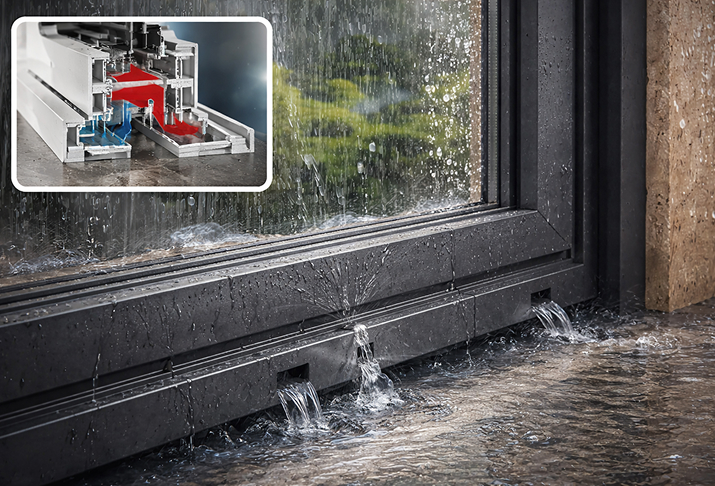
1. The Power of the "Gradient" Track
The most critical feature in a monsoon-proof window is the gradient track. In traditional sliding systems, the bottom track is often flat. During a storm, water pools in these flat tracks, and once the water level rises high enough, it spills over the internal lip and onto your floor.
A gradient track solves this with a deliberate 5-degree to 15-degree downward slope built directly into the profile. This ensures that gravity is always working in your favor. As soon as rain hits the track, it is forced to move toward the outer edge of the frame.
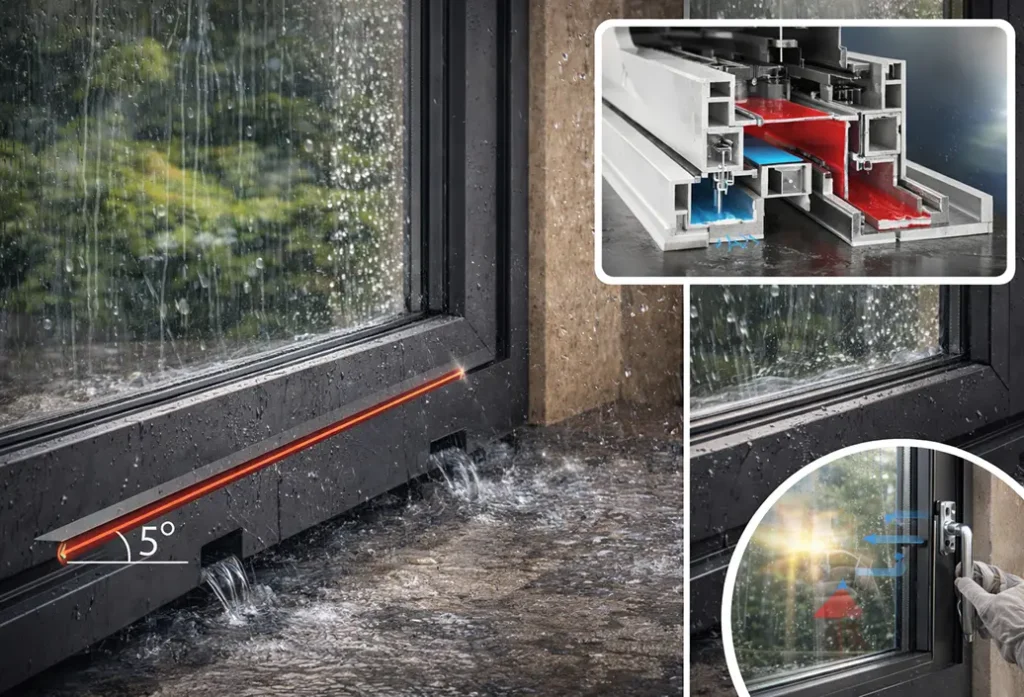
2. The Rain Track and "Dam" System
Top-tier manufacturers like WindoorKrafts incorporate an elevated internal section known as a “Rain Track.” Think of this as a mini-dam. Even if the wind is pushing rain horizontally against the glass, this raised inner profile acts as a physical barrier. The water is trapped in an outer “collection zone” before it can ever reach the inner sanctuary of your home.
3. Pressure Equalization: The "Secret" Science
Have you ever wondered why water seems to get “sucked” through tiny gaps during a storm? This happens because the air pressure inside your home is lower than the wind pressure outside. This pressure difference literally pulls rainwater through the seals.
High-performance windows use pressure equalization. By incorporating small “weep holes” and vents in specific locations, the air pressure inside the window frame is balanced with the outside air. When the pressure is equal, there is no “suction” effect, allowing the water to drain out naturally via the gradient slope.
Strategic Drainage Components
A high-performance system is only as strong as its weakest link. Here are the components that work in tandem with the gradient tracks:
Component | Function |
Weep Holes | Precisely machined slots that allow water to exit the frame. They are often covered with “one-way” caps to prevent insects or wind from entering. |
Multi-Point Gaskets | High-quality EPDM gaskets provide a compression seal that becomes tighter as wind pressure increases. |
Sill Slopes | The external masonry or aluminum sill is angled away from the building to prevent water from “back-flowing” toward the frame. |
Internal Drainage Paths | Channels hidden inside the frame that guide water from the glass surface down to the tracks. |
Why Installation is Half the Battle
Even the most advanced gradient track system will fail if the installation is botched. This is where professional expertise from WindoorKrafts becomes invaluable.
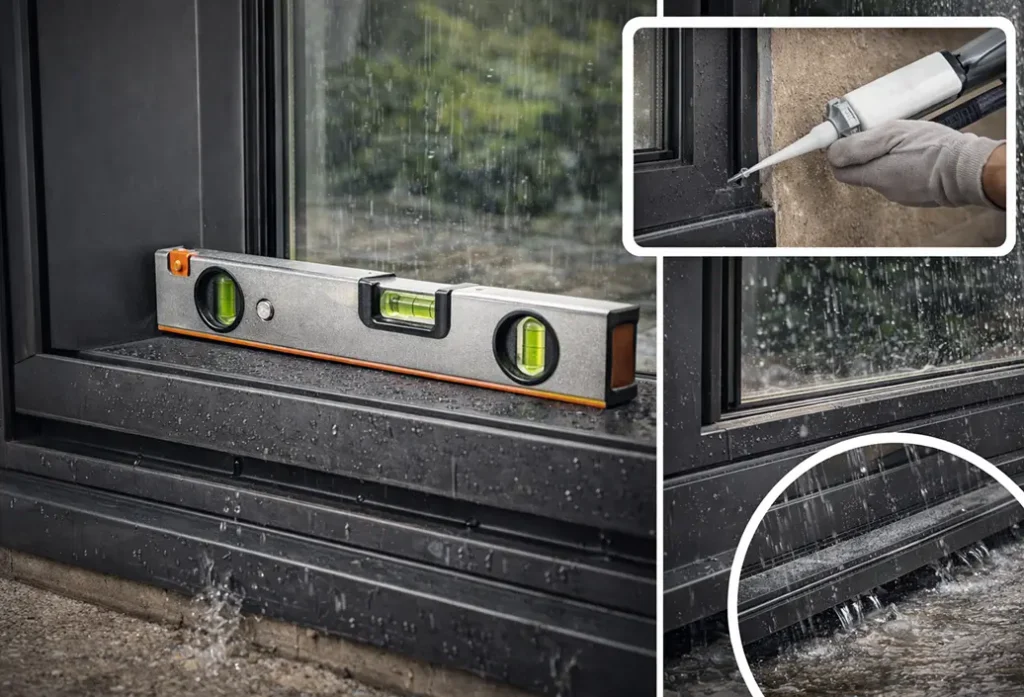
- Levelling: If a window is installed even slightly “tilted” toward the interior, the gradient slope becomes useless.
- Sealant Continuity: High-grade silicone must be applied not just for aesthetics, but to create a seamless waterproof barrier between the window frame and the wall.
- Sub-Sills: In areas with extreme rainfall, a sub-sill (an extra piece of aluminum under the main frame) is used to provide an additional layer of protection, directing water even further away from the building’s facade.
Final Thoughts
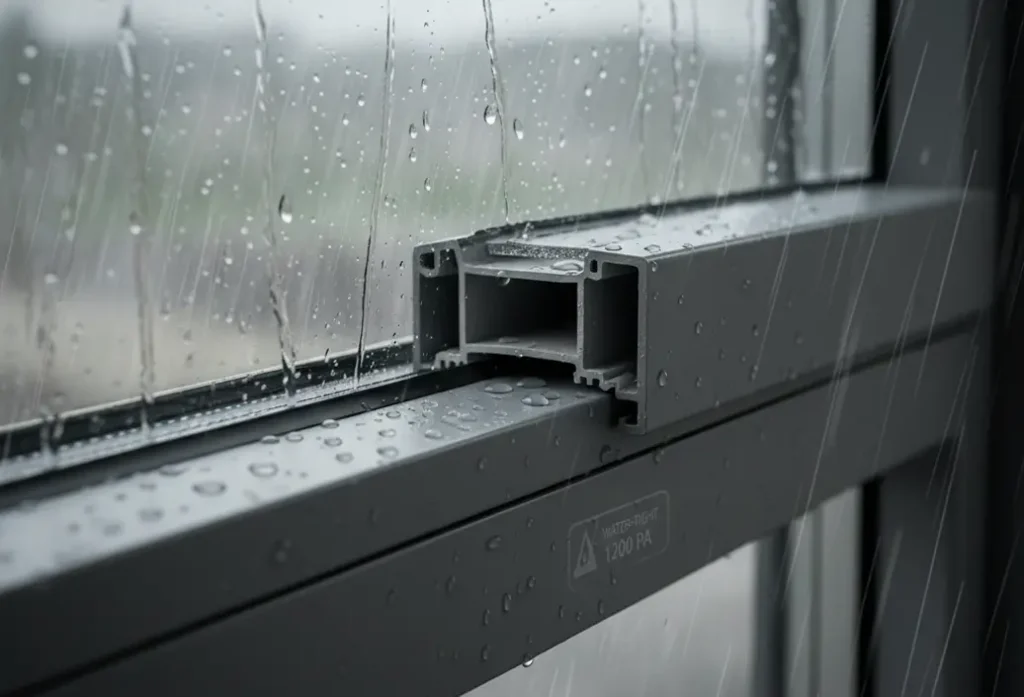
Preventing rain seepage is a feat of fluid dynamics and precision engineering. By choosing systems that feature gradient tracks, pressure-equalized drainage, and robust “dam” profiles, you are investing in more than just a view—you are investing in the structural integrity of your home. When looking for high-quality Windows in Hyderabad, always ask your provider about the “water-tightness” rating (often measured in Pascals). A window that can’t handle the pressure is just a leak waiting to happen.
Your Questions, Answered

1. What is a "Weep Hole" and why does my window have them?
Weep holes are small exit points in the bottom of a window frame designed to allow water that enters the tracks to drain out. Without them, water would accumulate and eventually seep into your walls or floors.
2. Can I install high-performance windows in an old house?
Absolutely. Modern aluminum and uPVC systems are highly customizable. Companies like WindoorKrafts can retrofit these high-performance frames into existing openings to instantly solve long-term leakage problems.
3. Do sliding windows leak more than casement windows?
Historically, yes. However, modern sliding windows with gradient tracks and multi-level sills have closed that gap. Casement (hinged) windows still offer a slightly better seal because the sash is pressed firmly against the frame when closed, but a well-engineered sliding window is more than capable of handling heavy storms.
4. How do I maintain my window's drainage system?
The most important maintenance task is ensuring the tracks and weep holes remain free of dust, debris, and dead insects. A quick vacuum or a wipe-down before the monsoon season begins is usually enough to keep the system flowing.
5. What makes "High-Performance" different from regular windows?
High-performance windows are tested against specific wind loads and water pressure standards. They use thicker aluminum or uPVC profiles, reinforced gaskets, and advanced internal drainage geometries that standard, “off-the-shelf” windows simply don’t have.