How High-Performance Windows Prevent Rain Seepage
Rain seepage through windows is a common issue caused by poor sealing, design flaws, or improper installation. High-performance windows are engineered to block, drain, and redirect water effectively, ensuring long-term protection, durability, and comfort even during heavy rainfall and harsh weather conditions.
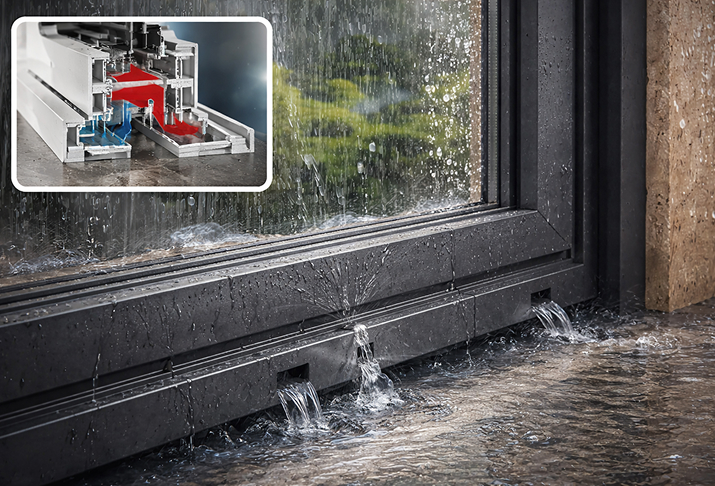
High-performance windows prevent rain seepage through gradient tracks, weep holes, and multi-point gaskets that direct water away instead of letting it pool. Sloped internal channels guide rain toward drainage points, while pressure equalization stops water from being pulled inward through gaps, keeping interiors dry even during heavy monsoon winds and rainfall.
What Causes Rain Seepage in Windows?
Rain seepage in windows usually does not happen through the glass—it occurs due to gaps, poor installation, or design failures around the frame.
Common causes:
- Gaps between window frame and wall
- Poor or damaged sealing
- Incorrect sill slope
- Blocked drainage (weep holes)
- Missing or faulty flashing
- Low-quality window systems
Water can even enter through tiny cracks via capillary action or gravity, especially during heavy rain or wind pressure.
The Engineering of Water Resistance
Standard windows often rely solely on rubber gaskets to keep water out. While gaskets are essential, they eventually face “hydrostatic pressure”—the force of water sitting against a seal. High-performance Aluminum Windows in Hyderabad utilize a more proactive approach. Instead of just trying to block water, they manage its flow through a series of internal channels and slopes.
What Are High-Performance Windows?
High-performance windows are engineered systems designed to resist water, air, and moisture infiltration, even under extreme weather conditions.
Key capabilities:
- Prevent rainwater penetration
- Control air leakage
- Manage condensation and humidity
- Maintain structural durability
They are tested under simulated wind-driven rain pressure conditions to ensure watertight performance.
A gradient track solves this with a deliberate 5-degree to 15-degree downward slope built directly into the profile. This ensures that gravity is always working in your favor. As soon as rain hits the track, it is forced to move toward the outer edge of the frame.
How High-Performance Windows Prevent Rain Seepage
1. Multi-Level Sealing Systems
Modern windows use dual or triple sealing layers:
- Outer seal blocks direct rain
- Inner seal prevents air and moisture entry
This “two-stage sealing” ensures water never reaches indoor spaces.
2. Advanced Drainage Systems (Weep Holes)
High-performance windows include built-in drainage channels that:
- Collect infiltrated water
- Redirect it outside safely
Without proper drainage, water accumulates and leaks inside.
3. Precision Installation & Airtight Fit
Even the best window fails if installed poorly.
High-performance systems ensure:
- Uniform gap sealing
- Proper alignment
- Airtight installation
Most leakage problems actually occur around the window, not the window itself.
4. Correct Sill Design and Slope
A properly designed sill:
- Slopes outward (5–15° recommended)
- Prevents water pooling
- Forces water away from the frame
Poor slope is one of the top causes of seepage in Indian homes.
5. High-Quality Sealants & Gaskets
Premium windows use:
- UV-resistant silicone sealants
- Durable EPDM gaskets
These materials:
- Stay flexible over time
- Prevent micro-gaps
- Resist weather damage
6. Flashing and Waterproof Barriers
Flashing acts as a hidden shield that:
- Redirects water away from joints
- Prevents water from entering wall cavities
Missing flashing is a major cause of hidden leaks.
7. Air Pressure Control & Tight Sealing
High-performance windows minimize air leakage, which is critical because:
- Air carries moisture into the structure
- Pressure differences can force rainwater inside
Premium systems achieve very low air infiltration rates, ensuring better protection.
Why Ordinary Windows Fail in Heavy Rain
Standard or poorly installed windows often:
- Depend only on surface sealing
- Lack drainage systems
- Use low-quality materials
As a result, even small rain exposure can lead to:
- Damp walls
- Mold growth
- Paint damage
- Structural deterioration
High-performance windows use pressure equalization. By incorporating small “weep holes” and vents in specific locations, the air pressure inside the window frame is balanced with the outside air. When the pressure is equal, there is no “suction” effect, allowing the water to drain out naturally via the gradient slope.
Benefits of High-Performance Windows
Immediate Benefits:
- No water leakage during heavy rain
- Improved indoor comfort
- Reduced maintenance
Long-Term Benefits:
- Prevents mold and structural damage
- Enhances energy efficiency
- Increases property value
High water-tightness ensures protection even during intense or irregular rainfall conditions.
Why Installation is Half the Battle
Even the most advanced gradient track system will fail if the installation is botched. This is where professional expertise from WindoorKrafts becomes invaluable.
- Levelling: If a window is installed even slightly “tilted” toward the interior, the gradient slope becomes useless.
- Sealant Continuity: High-grade silicone must be applied not just for aesthetics, but to create a seamless waterproof barrier between the window frame and the wall.
- Sub-Sills: In areas with extreme rainfall, a sub-sill (an extra piece of aluminum under the main frame) is used to provide an additional layer of protection, directing water even further away from the building’s facade.
How to Choose the Right High-Performance Window
Look for:
- Certified water-tightness ratings
- Multi-point locking systems
- Double or triple sealing
- Proven installation process
- Brand-backed warranties
Final Thoughts
Preventing rain seepage is a feat of fluid dynamics and precision engineering. By choosing systems that feature gradient tracks, pressure-equalized drainage, and robust “dam” profiles, you are investing in more than just a view—you are investing in the structural integrity of your home. When looking for high-quality Windows in Hyderabad, always ask your provider about the “water-tightness” rating (often measured in Pascals). A window that can’t handle the pressure is just a leak waiting to happen.