uPVC Windows Vs Aluminium Windows: Which is better?
Choosing between uPVC and aluminium windows depends on your need for insulation, durability, design, budget, and maintenance. uPVC windows are ideal for energy efficiency, noise reduction, and low maintenance, while aluminium windows offer slim frames, strength, and a modern architectural look.
uPVC and aluminium windows both offer strong performance, but they suit different priorities. uPVC provides better thermal insulation and soundproofing, making it ideal for hot or noisy areas, while aluminium offers slimmer, stronger frames suited for large glass panes and modern architectural designs. The right choice depends on your budget, climate, and style preference.
uPVC vs Aluminium Windows: Which is better?
Choosing windows is not only about selecting a frame. It is about deciding how your home will handle heat, dust, noise, ventilation, safety, and long-term comfort.
For homeowners in Hyderabad, this decision becomes even more important. The city has hot summers, busy roads, apartment communities, independent houses, villas, and modern building styles. That means one window material may not be perfect for every room.
Both uPVC and aluminium windows are excellent modern choices. But they serve different purposes.
If your priority is comfort, insulation, sound control, and value for money, uPVC windows are usually a strong choice. If your priority is slim frames, large glass panels, premium elevation, and structural strength, aluminium windows are often the better fit.
The best decision is not always uPVC or aluminium. In many homes, the smartest decision is using the right material in the right space.
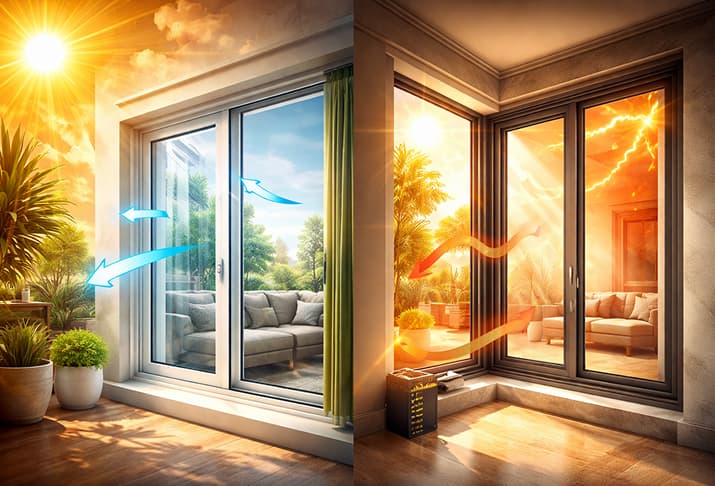
The Battle of Resilience: Plastic vs. Metal in Extreme Climates
Aluminium, being a metal, is a natural conductor. However, modern premium aluminium windows now feature “thermal breaks”—insulating strips within the frame that prevent heat transfer. While aluminium is structurally stronger and can support massive panes of glass with thinner frames, uPVC remains the champion of “cool” comfort for residential bedrooms and living areas.
Slim Profiles vs. Superior Insulation: Finding Your Aesthetic
If your architectural vision involves “less frame, more view,” aluminium is the clear winner. Because of its inherent strength, aluminium frames can be incredibly slim, making them the preferred choice for floor-to-ceiling windows and large balcony sliding doors. It offers a minimalist, industrial-chic look that many modern high-rise apartments and luxury villas demand.
On the other hand, uPVC profiles are generally bulkier due to the thickness required for structural integrity. However, this bulk is exactly what provides its world-class soundproofing. If you live near a busy road or a noisy commercial hub, the thick, multi-chambered design of uPVC combined with double glazing can reduce external noise by up to 30-40 decibels, creating a sanctuary of peace indoors.
Maintenance and Longevity: The "Fit and Forget" Factor
Both materials are leaps and bounds ahead of traditional wood, which requires constant polishing and is prone to termites. uPVC is virtually maintenance-free; it won’t rot, rust, or fade, even under intense UV exposure. A simple wipe with a damp cloth every few months is enough to keep it looking brand new for 20-25 years.
Aluminium is also highly durable and can last 40 years or more. It is usually powder-coated, which prevents corrosion. However, in very high-humidity areas or if the coating is scratched, there is a minor risk of oxidation over decades. While aluminium has a longer total lifespan, uPVC is often perceived as the more “user-friendly” material for the average homeowner because it never requires repainting or specialized metal care.
Cost-Effectiveness: Initial Investment vs. Lifetime Value
Aluminium is a premium investment. While the upfront cost is higher—sometimes double that of uPVC—the “scrap value” and the 40-year lifespan mean you may never have to replace your windows again. If you are building a “forever home” with massive glass facades, the structural stability and longevity of aluminium justify the higher price tag.
Engineering Peace: Security and Safety Features
Security is a non-negotiable aspect of modern home design. Both uPVC and aluminium windows are engineered with multi-point locking systems that secure the window at several points around the frame with a single turn of the handle.
Aluminium is naturally harder to break or cut through due to its metallic properties. However, high-quality uPVC windows are reinforced with galvanized steel inside the plastic profiles, making them incredibly tough. When paired with toughened or laminated glass, both systems provide a formidable barrier against intruders, ensuring your family stays safe and secure.
uPVC vs Aluminium Windows: Quick Comparison
| Feature | uPVC Windows | Aluminium Windows |
|---|---|---|
| Thermal Insulation | Excellent — natural heat barrier, keeps interiors cooler | Good only with thermal breaks (metal conducts heat) |
| Soundproofing | Superior — multi-chambered profiles reduce noise by 30–40 dB | Standard — less effective than uPVC |
| Frame Profile | Bulkier (needed for structural integrity) | Slim — ideal for floor-to-ceiling windows & large panes |
| Aesthetic Style | Cozy, wood-grain laminations available | Minimalist, industrial-chic, “less frame, more view” |
| Maintenance | Virtually maintenance-free; just wipe clean | Low; powder-coated, minor oxidation risk if scratched |
| Lifespan | 20–25 years | 40+ years |
| Strength | Reinforced with galvanized steel inside profiles | Naturally stronger; supports massive glass panes |
| Security | Multi-point locking + steel reinforcement | Multi-point locking; harder to cut through |
| Cost | More affordable; faster ROI via lower energy bills | Premium — sometimes double the cost of uPVC |
| Eco-Friendliness | Recyclable (more complex process); energy-saving | 100% recyclable without quality loss |
| Fire Safety | Self-extinguishing; may warp under extreme heat | Non-combustible, high melting point |
| Best For | Bedrooms, living areas, noisy locations, budget-conscious homes | Luxury villas, high-rises, large glass facades, “forever homes” |
Final Thought
Both materials offer a massive upgrade over traditional wood in terms of durability and weather resistance. At WindoorKrafts, we specialize in providing tailored fenestration solutions that match your home’s unique style and your personal budget, ensuring you get the best value and performance for years to come