Soundproof Windows for Homes
External noise can disturb sleep, reduce productivity, and affect daily comfort. Soundproof windows help create a peaceful indoor environment by reducing traffic, construction, and neighborhood noise. In this guide, discover how modern soundproof windows work, their benefits, costs, and why they are becoming essential for urban Homes.
oundproof windows reduce outside noise by combining laminated acoustic glass or double glazing, airtight EPDM seals and sturdy, well-insulated frames. Together, these block and absorb the sound vibrations that pass easily through ordinary windows. A good acoustic window can reduce outside noise by around 30–40 dB, cutting loud traffic to a soft background hum. Casement, tilt & turn and fixed windows offer the best sound insulation, and professional installation is essential, because even a small gap lets noise in.
Traffic, construction, loud neighbours and honking vehicles are now part of daily life in most cities. This noise affects sleep, focus, work-from-home calls and overall comfort. Soundproof windows offer a practical, long-term solution. They make rooms quieter and also improve energy efficiency.
This guide explains what soundproof windows are, how they work, the main types, and how to choose the right one for your home.
What Are Soundproof Windows?
Soundproof windows, also called acoustic windows, are specially engineered windows that block and absorb outside noise before it reaches your room. Standard windows use thin single glass and basic seals, so they let sound pass through easily. Acoustic windows use better glass, tighter seals and stronger frames.
A typical soundproof window includes:
- Laminated acoustic glass with a sound-absorbing interlayer
- Double or triple glazing with an insulating gap
- Airtight gaskets and seals on all sides
- Multi-chambered uPVC or insulated aluminium frames
- Multi-point locking that presses the shutter firmly shut
No window makes a room completely silent. A well-designed acoustic window, though, can bring noise down to a level where you can sleep, work and relax comfortably.
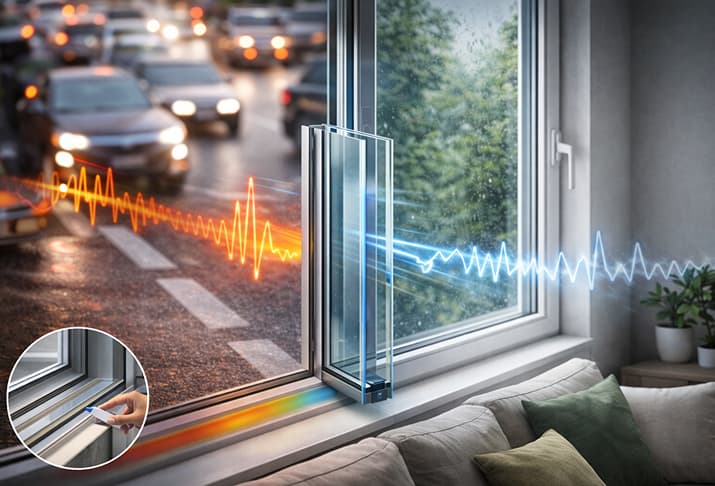
How Do Soundproof Windows Work?
Sound travels as vibrations through air and solid materials, and soundproof windows interrupt that path in several ways. Each component plays a role.
1. Laminated Acoustic Glass
Laminated glass has a PVB interlayer bonded between two glass sheets that absorbs sound vibrations. It is one of the most effective glass types for blocking traffic and engine noise, which is low-frequency sound that thin glass cannot stop.
2. Double and Triple Glazing
Double-glazed units have two glass panes separated by an air or gas-filled gap; triple glazing adds a third pane. The gap weakens sound energy as it passes from one pane to the next. It also reduces heat transfer.
3. Different Glass Thicknesses
Using two panes of different thickness, such as 6 mm and 8 mm, blocks a wider range of sound frequencies. Each pane resonates at a different frequency, so together they stop more noise than two identical panes.
4. Airtight Sealing
Sound easily leaks through tiny gaps around the shutter or frame. High-quality EPDM gaskets, welded uPVC corners and multi-point locks close these gaps completely.
5. Strong, Insulated Frames
The frame must stay rigid and sealed over time. Multi-chambered uPVC profiles and thermally broken aluminium frames resist sound transfer and keep their shape for years.
What Is an STC Rating, and Why Does It Matter?
The STC (Sound Transmission Class) rating measures how well a window blocks sound; the higher the number, the better the noise reduction. It helps you compare windows objectively instead of relying on marketing claims.
As a general guide:
| Window Type | Approx. STC Range | Noise Reduction Level |
|---|---|---|
| Standard single-glass window | 25–28 | Low |
| Standard double-glazed window | 28–33 | Moderate |
| Laminated glass window | 33–38 | High |
| Acoustic laminated + DGU window | 38–45+ | Very high |
Actual ratings vary by glass thickness, frame and installation. Ask your manufacturer for tested specifications.
Is Standard Double Glazing the Same as Soundproof Windows?
No. Standard double glazing is designed mainly for heat insulation, while true soundproof windows are engineered specifically for noise control. Many homeowners assume any double-glazed window will be quiet, but the difference is significant.
| Feature | Standard Double Glazing | Soundproof (Acoustic) Windows |
|---|---|---|
| Main purpose | Thermal insulation | Noise reduction |
| Glass type | Two regular panes | Laminated and/or varied-thickness panes |
| Sealing | Basic | Advanced, multi-point |
| Sound reduction | Moderate | High |
| Best for | Energy savings | Busy roads, construction, city noise |
The best results come from combining both: laminated glass inside a double-glazed unit.
What Are the Benefits of Soundproof Windows?
Soundproof windows improve much more than quietness. They upgrade your home’s overall comfort and value.
- Better sleep: less traffic and street noise means fewer disturbances at night.
- Productive work-from-home: quieter rooms for calls, meetings and focus.
- Lower stress: a calm indoor environment helps you relax.
- More privacy: your conversations, music and TV stay inside.
- Energy efficiency: the same glass and seals reduce heat entry, lowering AC use.
- Less dust: airtight frames keep out dust from roads and construction.
- Higher property value: buyers increasingly look for quiet, energy-efficient homes.
For more on cooling benefits, read why uPVC windows and doors are ideal for summers.
Which Types of Windows Are Best for Soundproofing?
Windows that close tightly on all four sides give the best sound insulation. Here is how the main types compare:
Casement Windows
Casement windows press firmly against the frame when closed, creating an excellent airtight seal. They are one of the best choices for bedrooms and road-facing rooms.
Tilt & Turn Windows
Tilt & turn windows combine multi-point locking with flexible ventilation. Tilt mode lets air in while keeping most noise and rain out, which makes them ideal for apartments.
Fixed Windows
Fixed windows don’t open, so they offer the highest sound insulation. They are great for staircases, studios and large view panels.
Sliding Windows
Sliding windows suit compact spaces and balconies but need a small gap for movement. Premium sliding systems with interlocking profiles, quality seals and laminated glass can still deliver good noise reduction.
Combination Windows
Combination windows pair fixed glass with casement or tilt panels. You get a wide view with strong sealing and controlled ventilation.
To compare opening styles in detail, read casement vs sliding windows.
Should You Choose uPVC or Aluminium for Soundproof Windows?
You could purchase the most expensive acoustic glass on the market, but if it is installed incorrectly, it will fail to perform. This is why choosing expert window installation services is non-negotiable. Professionals ensure that:
Both materials can deliver excellent acoustic performance when properly engineered.
- uPVC soundproof windows have multi-chambered profiles that naturally absorb sound and heat. They are cost-effective for bedrooms, studies and living rooms. Learn more in our guide on uPVC windows for noise reduction.
- Aluminium soundproof windows suit large openings, balconies and modern elevations. Premium systems with heavy-duty gaskets and DGU glass offer strong acoustic control with slim frames. See types of aluminium windows.
For a complete material comparison, read uPVC windows vs aluminium windows.
Why Is Installation So Important for Soundproofing?
Even the best acoustic glass will fail if the window is installed with gaps. Sound finds the weakest point, and that is often the joint between the frame and the wall.
Professional installation ensures:
- Accurate site measurement
- Perfect frame alignment and levelling
- Full PU foam filling around the frame
- External silicone sealing
- Correct locking adjustment and final testing
Always choose a manufacturer whose own trained team handles installation. You can see examples of our work on the WindoorKrafts projects page.
What Mistakes Should You Avoid When Buying Soundproof Windows?
Avoid these common mistakes to get real noise reduction:
- Choosing cheap single glass to save money
- Focusing only on glass and ignoring frames and seals
- Picking basic sliding windows for very noisy rooms
- Ignoring STC ratings and tested specifications
- Hiring inexperienced installers
- Skipping a site assessment of your noise sources
How Do You Maintain Soundproof Windows?
Acoustic windows need very little maintenance, but simple care keeps them performing well.
- Clean glass and frames with mild soap and a soft cloth
- Inspect gaskets every few months for cracks or gaps
- Clean and lubricate tracks and hinges for smooth, tight closing
- Check locks to make sure shutters still close firmly
For a full routine, follow our guide on how to care for your uPVC and aluminium windows.
Enjoy a Quieter, More Comfortable Home with WindoorKrafts
A peaceful home is no longer a luxury; it is essential for good sleep, focused work and everyday comfort. The right combination of acoustic glass, airtight frames and expert installation can dramatically reduce outside noise and transform how your home feels.
Why choose WindoorKrafts for soundproof windows?
- ✅ 10+ years of experience manufacturing uPVC and aluminium windows in Hyderabad
- ✅ ENCRAFT uPVC systems and AluK aluminium profiles built for acoustic and thermal performance
- ✅ Laminated, toughened and double-glazed glass options matched to your noise level
- ✅ Casement, tilt & turn, fixed, combination and premium sliding windows
- ✅ In-house fabrication at our Pragathi Nagar factory with strict quality checks
- ✅ Free site visit to assess noise sources and recommend the right solution
- ✅ Trained installation team for complete airtight sealing
Ready for a quieter home? Explore our uPVC and aluminium window range or book your free consultation today.
📞 Call: +91 99123 15206 | +91 90300 07522
📧 Email: info@windoorkrafts.com
📍 Visit: Road No. 8, ALEAP Industrial Area, Pragathi Nagar, Hyderabad – 500090
Shut out the noise and bring home the peace. Get your free quote from WindoorKrafts today.