uPVC Windows Vs Aluminium Windows: Which is better?
Choosing between uPVC and aluminium windows depends on your need for insulation, durability, design, budget, and maintenance. uPVC windows are ideal for energy efficiency, noise reduction, and low maintenance, while aluminium windows offer slim frames, strength, and a modern architectural look.
Choose uPVC windows if your priorities are keeping heat out, cutting traffic noise and staying within budget. Choose aluminium windows if you want slim frames, very large glass panels or wide sliding openings. For most Hyderabad homes, the best answer is not one or the other. It is uPVC for bedrooms and street-facing rooms, and aluminium for the big living-room or balcony opening.
Whatever frame you pick, the glass and the installation will decide most of your comfort. The rest of this guide explains why.
Why "Which Is Better?" Is the Wrong Question
Most comparisons treat this as a contest with one winner. That is not how we see it after fitting windows across Hyderabad apartments, villas and offices.
A single home has very different openings. A bedroom window facing a busy road has one job: keep noise and heat out so you can sleep. A 10-foot living-room opening onto a balcony has another job: give you a wide view and a smooth slide. Asking one material to do both jobs perfectly usually means a compromise somewhere.
So our advice is simple. Decide opening by opening, not house by house. The sections below show which material handles each problem better, so you can match them to your rooms. If you want a wider overview of both product families first, see our complete guide to uPVC and aluminium solutions.
Which Keeps a Home Cooler in Hyderabad's Summer?
uPVC has the edge on the frame, but the glass matters more than most buyers realise.
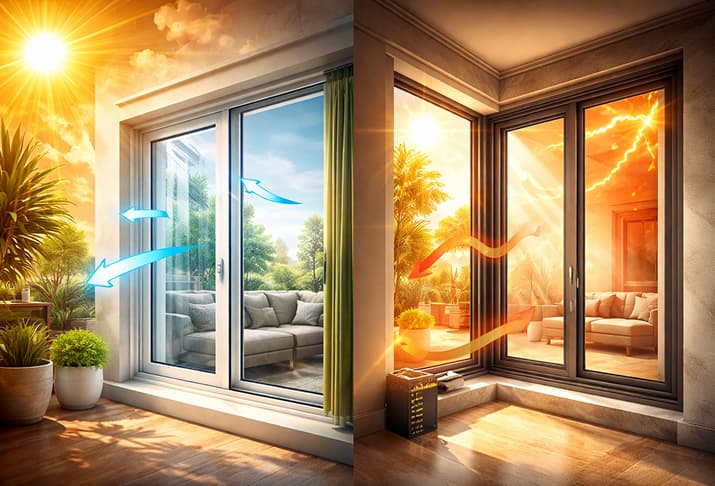
Hyderabad summers regularly cross 40°C, and west-facing rooms take the worst of the afternoon sun. Here is what actually happens at the window:
- Frame material: uPVC is a plastic that conducts very little heat. Aluminium is a metal and conducts heat many hundreds of times faster. A standard aluminium frame on a sunny wall gets hot to the touch and passes some of that heat indoors.
- Thermal breaks: Better aluminium systems put an insulating strip inside the frame to block that heat path. This narrows the gap with uPVC but adds cost. Ask whether a quoted aluminium system is thermally broken; many budget ones are not.
- Glass: The glass usually makes up most of the window’s surface. Single clear glass lets heat straight through, whatever frame surrounds it. Double-glazed units, or glass with a heat-reflective or Low-E coating, make the bigger difference.
Our view: on a west or south wall, uPVC with double glazing is the most cost-effective way to keep a room cooler. If you love the look of aluminium for that wall, budget for a thermally broken frame and performance glass. Otherwise you are paying for slim frames and getting a warmer room.
Which Is Better for Noise, Dust and Monsoon Rain?
For sealing out noise, dust and rain, the deciding factors are the window type and the seals, with uPVC casements usually performing best.
Noise. Sound gets in through gaps first and glass second. uPVC casement windows press shut against rubber gaskets on all four sides, which seals tightly. Sliding windows, in either material, always leave small gaps where the panels pass each other. If you live near an arterial road, the metro line or a construction site, a uPVC casement with laminated or double glazing is the stronger choice. We cover this in more depth in our guide to soundproof windows for homes.
Dust. Hyderabad’s ongoing construction means fine dust in most neighbourhoods. The same rule applies: casements seal better than sliders. If you need sliders, look for brush seals at the interlock and a raised track design.
Monsoon rain. Wind-driven rain tests the drainage, not the frame. Both materials can be fully weather-tight if the frame has proper drainage slots and the gap between frame and wall is sealed correctly. Most leaks we are called to fix come from poor installation, not from the material itself.
Which Looks Better and Handles Large Openings?
Aluminium wins clearly when you want slim frames and big glass.
Aluminium is stiff, so its frames can be much thinner while still carrying heavy glass. That is why it suits floor-to-ceiling windows, wide balcony sliding doors and lift-and-slide systems. You see more view and less frame, which suits modern villas and high-rise apartments.
uPVC frames are wider because they need internal steel reinforcement to stay rigid. For normal window sizes this barely matters, and uPVC comes in wood-grain and coloured finishes that suit traditional interiors. On very large sliding panels, though, uPVC frames become bulky, and that is where aluminium is the better fit.
How Do Cost, Durability, Maintenance and Security Compare?
At standard window sizes, uPVC usually costs less. Both last for decades when the quality is right.
Cost. For regular bedroom and kitchen windows, uPVC is generally the more affordable option. Aluminium prices vary widely: a basic non-insulated slider can be close to uPVC, while a thermally broken system with slim interlocks costs noticeably more. When you compare quotes, compare the full specification (profile, glass, hardware and installation), not just the price per square foot. A cheap quote often hides thinner profiles or single glazing.
Durability. Quality matters more than material here. Good uPVC uses a UV-stabilised, lead-free compound with steel reinforcement, so it does not yellow or sag in strong sun. Good aluminium depends on profile thickness and a quality powder-coated or anodised finish, which protects against corrosion. Low-grade versions of either can disappoint within a few years.
Maintenance. Both are low-maintenance. Wipe frames with mild soapy water and keep tracks and drainage holes free of dust, especially before the monsoon. Avoid abrasive cleaners, which scratch aluminium coatings.
Security. Both can be equally secure. What matters is multi-point locking, reinforced frames and toughened or laminated glass. Ask about these for ground-floor and independent-house openings.
uPVC vs Aluminium Windows: Side-by-Side Comparison
Factor | uPVC windows | Aluminium windows |
|---|---|---|
Heat insulation (frame) | Very good by nature | Good only with a thermal break |
Noise reduction | Strong, especially as casements | Moderate; depends on glass and seals |
Dust and rain sealing | Excellent in casement style | Good with brush seals and proper drainage |
Frame thickness | Wider | Slim |
Large panels and wide sliders | Limited; frames get bulky | Best choice |
Finishes | White, wood-grain, colours | Powder-coated or anodised colours |
Cost at standard sizes | Usually lower | Basic: similar; thermally broken: higher |
Maintenance | Wipe clean | Wipe clean; avoid scratching the coating |
Best suited to | Bedrooms, street-facing rooms, west walls | Living rooms, balconies, facades, villas |
Which Material Should You Use in Each Room?
This is the room-by-room split we recommend most often to Hyderabad homeowners.
Room or opening | Our usual pick | Why |
|---|---|---|
Bedrooms | uPVC casement | Best sealing for quiet sleep and a cooler room |
Street-facing rooms | uPVC with laminated or double glass | Blocks traffic noise and dust |
West-facing walls | uPVC with double glazing | Cuts afternoon heat gain |
Living room or balcony door | Aluminium sliding or lift-and-slide | Slim frames, wide view, large panels |
Kitchen | uPVC casement or tilt-and-turn | Easy to clean, good ventilation, seals out dust |
Bathroom | uPVC ventilator | Handles moisture well |
Villa facade or high-rise glazing | Aluminium | Strength for big glass and a modern look |
Mixing both in one home is common, and a good manufacturer can match colours so the house still looks consistent. You can see examples of mixed installations on our projects page.
What Should You Ask Before You Buy?
These five questions separate a good window from an expensive mistake. Ask them of any supplier, including us.
- What glass is included? Single, toughened, laminated or double-glazed? This affects heat and noise more than the frame.
- For aluminium: is the system thermally broken? If not, expect a warmer frame on sunny walls.
- For uPVC: is the profile steel-reinforced and UV-stabilised? This decides whether it stays straight and white in Hyderabad’s sun.
- Who installs it, and how is the wall gap sealed? Most leaks and draughts come from installation, not the product.
- What warranty covers the profile, hardware and installation separately? A clear, written answer is a good sign.
Get the Right Window for Every Room
The right choice is rarely just uPVC or just aluminium. It is the right material, glass and installation for each opening in your home.
At WindoorKrafts, we manufacture both uPVC and aluminium windows and doors in Hyderabad, so our advice is not tied to selling one material. Our team can visit your site, measure each opening and recommend what fits your rooms, your sun direction and your budget.
Book a free site visit and quote, or call us on 040 2988 5206 to talk to a window specialist today.