
Casement Vs Sliding Windows: What’s the Difference?
Choosing between casement and sliding windows affects ventilation, energy efficiency, maintenance, and home aesthetics. While both window styles offer unique benefits, selecting the right one depends on your space, budget, and lifestyle needs. Here’s a detailed comparison to help homeowners make the best decision.
Casement windows are side-hinged and open outward, offering better ventilation, insulation, and security, while sliding windows open horizontally along a track, making them more space-saving, affordable, and easier to maintain. The right choice depends on your room’s ventilation needs, available space, budget, and style preference.
What Are Casement Windows?
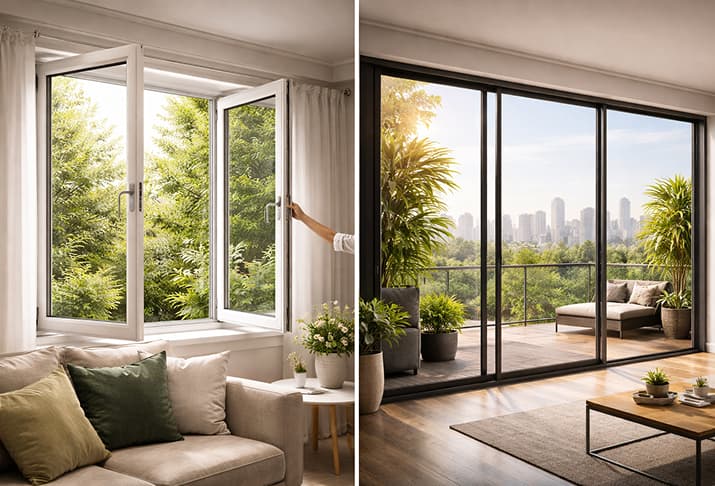
Casement windows are side-hinged windows that open outward like a door. They usually operate with a handle or crank mechanism.
These windows create a tight seal when closed, making them highly energy efficient. Homeowners commonly install casement windows in bedrooms, kitchens, bathrooms, and areas requiring maximum ventilation.
Main Features of Casement Windows
- Side-hinged design
- Opens outward fully
- Excellent airflow
- Tight weather sealing
- Modern appearance
- Strong locking systems
What Are Sliding Windows?
Sliding windows operate horizontally along a track. One panel slides past the other to open and close the window.
These windows work best in compact spaces because they do not swing outward or inward. Sliding windows are common in apartments, balconies, living rooms, and contemporary homes.
Main Features of Sliding Windows
- Horizontal sliding mechanism
- Space-saving design
- Wider glass area
- Smooth operation
- Minimal maintenance
- Modern aesthetic appeal
Casement vs Sliding Windows: Quick Comparison
| Feature | Casement Windows | Sliding Windows |
|---|---|---|
| Opening Style | Opens outward | Slides horizontally |
| Ventilation | Excellent | Moderate |
| Energy Efficiency | High | Moderate |
| Space Requirement | Needs opening space | No extra space needed |
| Maintenance | Moderate | Easy |
| Security | Excellent | Good |
| Noise Reduction | Better | Moderate |
| Cost | Slightly higher | Budget-friendly |
| Best For | Ventilation & insulation | Space-saving applications |
| Air Leakage | Minimal | Slightly higher |
Difference Between Casement and Sliding Windows
1. Ventilation and Airflow
Ventilation is one of the biggest differences between casement and sliding windows.
Casement windows open completely outward, allowing maximum airflow into the room. They can also capture side breezes and direct fresh air inside. This feature makes them ideal for areas requiring natural ventilation.
Sliding windows only open halfway because one panel overlaps the other. As a result, airflow remains comparatively limited.
Best Choice for Ventilation:
Casement windows
Many window experts consider casement windows superior for natural airflow and cross ventilation.
2. Energy Efficiency
Energy efficiency directly impacts electricity bills and indoor comfort.
Casement windows create a compression seal when closed. This airtight locking system minimizes air leakage and improves insulation.
Sliding windows use tracks and rollers, which naturally leave small gaps. These gaps can allow slight air infiltration over time.
Therefore, casement windows generally outperform sliding windows in thermal efficiency.
Why Casement Windows Are More Energy Efficient
- Better sealing mechanism
- Reduced heat transfer
- Lower air leakage
- Improved insulation
- Better weather resistance
Best Choice for Energy Savings:
Casement windows
Industry comparisons consistently show casement windows offering tighter seals and improved thermal performance.
3. Space Requirements
The available space around your windows significantly influences your choice.
Casement windows swing outward, requiring sufficient exterior clearance. Therefore, they may not work well near walkways, balconies, or compact outdoor spaces.
Sliding windows move within their own frame. They do not require extra space to operate, making them ideal for apartments and smaller homes.
Best Choice for Compact Spaces:
Sliding windows
4. Ease of Operation
Both window styles are easy to use, but their mechanisms differ.
Casement windows operate using cranks or handles. Many homeowners find them convenient, especially in hard-to-reach areas like above kitchen sinks.
Sliding windows glide smoothly on tracks and require minimal effort to open.
Best Choice for Simplicity:
Sliding windows
5. Maintenance Requirements
Maintenance plays a major role in long-term window performance.
Casement windows include hinges, locks, and crank systems that may require occasional servicing.
Sliding windows contain fewer moving parts, but dirt can accumulate inside the tracks. Regular cleaning keeps them functioning smoothly.
Maintenance Comparison
Casement Windows
- Requires hinge inspection
- Hardware maintenance needed
- Exterior glass cleaning may be difficult
Sliding Windows
- Easy track cleaning
- Minimal hardware maintenance
- Simpler long-term upkeep
Best Choice for Low Maintenance:
Sliding windows
6. Security and Safety
Home security is another important consideration.
Casement windows generally offer stronger locking systems because the sash presses tightly into the frame when closed.
Sliding windows also provide good security, but lower-quality systems may become vulnerable if tracks wear out.
Why Casement Windows Are More Secure
- Multi-point locking systems
- Tight compression seal
- Difficult to force open externally
Best Choice for Security:
Casement windows
7. Noise Reduction
If you live near busy roads or urban environments, sound insulation matters.
Casement windows reduce outside noise more effectively due to their airtight seal.
Sliding windows may allow slightly more sound penetration through track gaps.
Best Choice for Noise Reduction:
Casement windows
8. Appearance and Design
Both window styles enhance modern architecture differently.
Casement windows provide a sophisticated and elegant appearance. They suit traditional, luxury, and modern homes alike.
Sliding windows create a minimalist and contemporary aesthetic with larger uninterrupted glass views.
Best Window Style Based on Design
Choose Casement Windows If You Want:
- Premium appearance
- Traditional-modern blend
- Elegant architecture
Choose Sliding Windows If You Want:
- Contemporary styling
- Wider glass openings
- Minimalist look
9. Cost Comparison
Budget often influences the final decision.
Casement windows usually cost more because of:
- Complex hardware
- Better sealing systems
- Hinges and crank mechanisms
Sliding windows remain more affordable due to their simpler design.
Which Window Is More Affordable?
Sliding windows are usually:
- Easier to manufacture
- Faster to install
- Lower in maintenance cost
Best Budget-Friendly Option:
Sliding windows
Ventilation and Airflow Control
Ventilation is perhaps the most significant functional difference between the two. Casement windows are often described as “wind sails.” Because the entire sash opens outward, it can be angled to catch side breezes and funnel fresh air into the room. This provides 100% airflow through the window opening.
Sliding windows typically only allow 50% of the window area to be open at any given time, as one sash must slide behind the other. However, they are ideal for wide openings where you want a panoramic view without the obstruction of multiple vertical frames. In warmer climates, the ability to have a large, unobstructed opening is vital for maintaining a comfortable indoor temperature.
Which Window Style Is Better for Different Rooms?
Best Rooms for Casement Windows
Casement windows work best in:
- Bedrooms
- Kitchens
- Bathrooms
- Study rooms
- Areas requiring airflow
Best Rooms for Sliding Windows
Sliding windows work best in:
- Living rooms
- Balconies
- Apartments
- Compact spaces
- Wide wall openings
Space Constraints and Exterior Layout
Before making a final choice, you must consider the exterior of your home. Since casement windows swing outward, they require clear “swing space.” If your window opens onto a narrow walkway, a deck with heavy foot traffic, or a porch, an open casement window could become an obstruction or a safety hazard.
Sliding windows are the ultimate space-savers. Because they stay flush with the wall, they are perfect for areas adjacent to patios or walkways. They provide a seamless transition between indoor and outdoor spaces without encroaching on your exterior square footage.
Maintenance and Longevity
Longevity often comes down to the number of moving parts. Sliding windows have a very simple design, which often translates to a longer lifespan with less mechanical failure. Cleaning is also a breeze; most modern sliders feature sashes that can be lifted out or tilted in, allowing you to clean the exterior glass from inside your home.
Casement windows require occasional lubrication of the cranking gears to ensure smooth operation. While they are built to last, the hinges and cranks can wear out over decades of heavy use. However, they offer a unique advantage in cleaning: many models open to a full 90-degree angle, allowing you to reach around and clean the outside pane from the safety of your room.
Conclusion
Both casement and sliding windows offer excellent functionality when chosen correctly.
If energy efficiency, airflow, and insulation matter most, casement windows are the superior option.
If you prefer affordability, space-saving operation, and modern aesthetics, sliding windows provide outstanding value.
Before making a decision, evaluate:
- Room size
- Ventilation requirements
- Exterior clearance
- Budget
- Maintenance expectations
- Design preferences
The right window style can improve comfort, reduce energy bills, and enhance your home’s overall appearance for years to come.
For modern homes seeking durability, aesthetics, and performance, premium uPVC and aluminium window systems continue to remain the preferred choice among homeowners and architects worldwide.

Pingback: Soundproof Windows for Homes