
Types of Aluminium Windows: A Complete Guide to Choosing the Right Style for Your Space
A complete guide to aluminium window types, explaining styles, best uses, ventilation, energy efficiency, durability, maintenance, and how to choose the right fit.
Common aluminium window types include casement, sliding, fixed (picture), tilt and turn, bi-fold, slide and fold, and louvred windows — each suited to different ventilation, space, and design needs. Casement and louvred styles maximise airflow, sliding and fixed windows save space and light, while bi-fold and tilt-and-turn suit premium, entertaining, or high-security spaces.
Types of Aluminium Windows
When it comes to upgrading your home or office, windows are often an afterthought — until you realise how much they shape natural light, ventilation, energy efficiency, and overall design. Among the materials available today, aluminium has emerged as the clear favourite for homeowners, architects, and builders alike, thanks to its unmatched strength, sleek appearance, and long-term durability.
But here’s where most buyers get stuck: aluminium windows aren’t a single product. They come in multiple structural designs, each suited to different rooms, climates, and architectural styles. Choosing the wrong type can mean poor ventilation, higher energy bills, or a design mismatch that’s expensive to fix later.
In this guide, we’ll break down every major type of aluminium window, explain where each works best, and help you make a confident, informed decision — without the generic fluff you’ll find elsewhere.
Why Aluminium Windows Are Dominating Modern Construction
Before diving into the types, it’s worth understanding why aluminium has overtaken wood and uPVC as the material of choice for windows in both residential and commercial projects.
Aluminium frames are inherently strong yet lightweight, allowing for slimmer profiles and larger glass panels — which means more natural light and unobstructed views. Unlike wood, aluminium doesn’t warp, swell, rot, or attract termites. Unlike uPVC, it doesn’t yellow or lose structural integrity under prolonged sun exposure.
Aluminium also offers exceptional design flexibility. It can be powder-coated or anodized in virtually any colour or finish, making it easy to match contemporary, industrial, minimalist, or traditional aesthetics. With proper thermal breaks, modern aluminium windows also deliver strong energy efficiency — debunking the old myth that aluminium is a poor insulator.
The real decision, then, isn’t whether to choose aluminium — it’s which type of aluminium window suits your specific space.
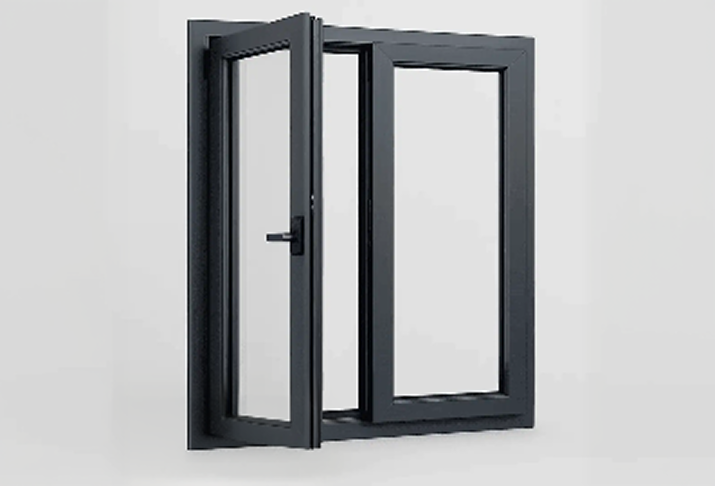
Casement Windows: The All-Rounder for Ventilation and Views
Casement windows are hinged on one side and open outward (or occasionally inward) using a handle or crank mechanism. They’re one of the most versatile and widely used aluminium window styles, and for good reason.
Because the entire sash swings open, casement windows allow maximum airflow — making them ideal for kitchens, bathrooms, and bedrooms where ventilation matters. When closed, the sash presses tightly against the frame, creating a strong seal that improves energy efficiency and reduces draughts, which is particularly valuable in extreme climates.
Casement windows also offer unobstructed views since they have fewer visible frame divisions compared to sliding designs. They’re available in single, double, or French casement configurations, giving you flexibility depending on the size of the opening.
Best suited for: Kitchens, bedrooms, bathrooms, and homes prioritising ventilation and energy efficiency.
Sliding Windows: Space-Saving Simplicity for Modern Homes
Sliding aluminium windows move horizontally along a track, with one or more panels gliding past each other. This design eliminates the need for swing clearance, making sliding windows a practical choice for compact spaces, balconies, and rooms where furniture or outdoor elements might obstruct an outward-opening sash.
One of the biggest advantages of aluminium sliding windows is the ability to accommodate large glass panels without compromising structural strength. This makes them especially popular in urban apartments and modern homes that prioritise expansive views and natural light.
Maintenance is also relatively simple — sliding systems have fewer moving hardware components like hinges and cranks, which translates to less wear over time. However, because sliding windows only open up to 50% of the total window area (in a two-panel configuration), ventilation is comparatively limited versus casement designs.
Best suited for: Living rooms, balconies, compact apartments, and spaces where outward clearance is limited.
Fixed (Picture) Windows: Maximising Light Without Compromise
Fixed windows, often called picture windows, don’t open at all. Their sole purpose is to let in natural light and frame a view — and they do this exceptionally well.
Because there’s no operable hardware, fixed windows have the slimmest possible frames, allowing for the largest uninterrupted glass area of any window type. This makes them a favourite for statement walls, scenic views, stairwells, and double-height spaces where ventilation isn’t a primary concern.
Fixed windows are also among the most energy-efficient and weather-resistant options, since there are no seams, gaps, or moving parts that could allow air or water infiltration. They’re frequently paired with operable windows nearby (such as casement or sliding units) to balance light, views, and airflow in the same room.
Best suited for: Living rooms with scenic views, stairwells, accent walls, and commercial lobbies.
Tilt and Turn Windows: Dual Functionality for Versatile Spaces
Tilt and turn windows are a hybrid design that offers two distinct opening modes. In “tilt” mode, the top of the sash tilts inward slightly, allowing for controlled background ventilation without fully opening the window — ideal for security and weather protection. In “turn” mode, the window swings fully inward like a door, allowing for complete access and easy cleaning from inside.
This dual functionality makes tilt and turn windows particularly popular in European-style architecture and increasingly in Indian homes seeking a premium, modern look. The inward-opening design also means there’s no risk of the window catching wind or obstructing balconies and walkways outside.
Because the sash seals on all sides when closed, tilt and turn windows typically offer superior airtightness compared to casement or sliding designs — a significant advantage for sound insulation and thermal performance.
Best suited for: Bedrooms, home offices, high-rise apartments, and homes prioritising security and noise reduction.
Bi-Fold Windows: The Statement Piece for Indoor-Outdoor Living
Bi-fold aluminium windows consist of multiple panels connected by hinges that fold and stack to one side (or both sides) when opened, creating a wide, unobstructed opening. They’re often used to connect interior spaces with outdoor areas like patios, gardens, or balconies — essentially functioning as a window-sized version of bi-fold doors.
The appeal of bi-fold windows lies in their transformative effect: when fully open, they blur the boundary between indoor and outdoor spaces, making rooms feel significantly larger and more connected to their surroundings. This makes them especially popular for kitchen pass-throughs, home bars, and entertainment areas.
While bi-fold windows offer dramatic openness, they do require more maintenance of hinges and tracks compared to simpler designs, and their cost is typically higher due to the multi-panel hardware involved.
Best suited for: Kitchen serving hatches, home bars, patios, and spaces designed for entertaining.
Slide and Fold (Folding-Sliding) Windows: Premium Flexibility for Large Openings
A more advanced variation of the bi-fold concept, slide and fold systems combine sliding tracks with folding panels, allowing for exceptionally wide openings — sometimes spanning entire walls. These systems are commonly used in luxury homes, resorts, and commercial spaces where the goal is to create a seamless transition between indoor and outdoor environments.
Slide and fold windows require precise engineering and high-quality tracks to ensure smooth operation, especially with larger or heavier panels. They’re a higher investment compared to standard casement or sliding windows, but the visual and functional payoff — particularly for large living areas, verandas, or rooftop spaces — is considerable.
Best suited for: Luxury homes, rooftop lounges, resorts, and large open-plan living spaces.
Louvred (Jalousie) Windows: Maximum Airflow Control
Louvred windows consist of horizontal aluminium or glass slats that open and close in unison, much like blinds, via a crank or lever mechanism. This design allows for fine control over airflow and light while maintaining privacy — even when partially open, the angled slats prevent direct sightlines into the room.
These windows are particularly effective in tropical and humid climates, where consistent cross-ventilation is essential for comfort and reducing reliance on artificial cooling. They’re also a popular choice for bathrooms, utility areas, and staircases where privacy and ventilation matter more than expansive views.
Best suited for: Bathrooms, utility rooms, tropical climates, and staircases.
How to Choose the Right Aluminium Window Type for Your Project
With so many options available, selection often comes down to four practical factors:
Ventilation needs — Rooms like kitchens and bathrooms benefit from casement or louvred windows that maximise airflow, while living rooms with scenic views may prioritise fixed or sliding designs.
Available space and clearance — If outward clearance is limited (such as on a narrow balcony), sliding or tilt and turn windows are more practical than casement designs that swing outward.
Climate and energy efficiency — In extreme heat or cold, casement and tilt and turn windows with thermal breaks typically outperform sliding systems in terms of sealing and insulation.
Budget and long-term maintenance — Fixed and sliding windows generally involve lower hardware costs and maintenance, while bi-fold and slide-and-fold systems represent a higher upfront investment but deliver a premium aesthetic and functional payoff.
Rather than choosing a single window type for an entire home, many architects and designers mix window types across different rooms — using fixed windows for views, casement for ventilation-heavy spaces, and bi-fold or slide-and-fold for entertaining areas — to create a balanced, functional design.
Final Thoughts: Making an Informed Choice
Aluminium windows offer a rare combination of durability, design flexibility, and performance — but only when the right type is matched to the right space. Whether you’re renovating a single room or planning windows for an entire home, understanding how each design performs in terms of ventilation, light, energy efficiency, and maintenance will save you both money and frustration down the line.
At WindoorKrafts, we work with homeowners, architects, and builders to identify the ideal aluminium window systems for every space — balancing aesthetics, performance, and budget. If you’re ready to explore the best aluminium window options for your project, contact our team today and let’s find the perfect fit for your home.
Pingback: Aluminium Windows Maintenance Guide for Hyderabad Homes
Pingback: Aluminium vs uPVC Sliding Doors: Which Is Better?
Pingback: Aluminium Windows Maintenance Guide for Hyderabad Homes