
Which Is Better for Your Home: Sliding Doors or Casement Doors?
Sliding vs casement doors depends on your space and needs. Sliding doors save floor space and suit balconies and wide openings, while casement doors offer wider access and stronger ventilation. Choose based on layout, airflow, maintenance, and weather protection.
Sliding doors are usually better when you need to save floor space, create a wide glazed opening, or connect a room to a balcony or patio. Casement doors are often better when you want a clear opening, strong ventilation, and hinged operation. The right Windoorkraft choice depends on your layout, opening size, exposure, and daily use.
Choosing between sliding and casement doors affects more than appearance. The opening mechanism changes usable space, airflow, access, maintenance, sealing, and everyday movement. For Hyderabad homes, balcony size, monsoon exposure, dust, traffic noise, and furniture placement can all influence the better choice.
Key Takeaways
- Choose sliding doors for compact balconies, patios, wide openings, and spaces where a swinging panel would obstruct movement.
- Choose casement doors when you want a clear passage, wide opening, and strong airflow.
- Performance depends on the complete system: profile, glass, hardware, locks, seals, drainage, fabrication, and installation.
- Neither style is universally better; the right door must suit the exact opening.
What Are Sliding Doors and Casement Doors?
A sliding door moves horizontally along tracks and does not need inward or outward swing clearance. WindoorKrafts lists uPVC sliding systems in several track configurations and positions them for balconies, patios, large openings, apartments, and villas. Explore Windoorkrafts uPVC Sliding Doors
A casement door is attached to the frame with side hinges and opens inward or outward. Single casement doors use one operable panel, while double casement doors use two panels for a broader passage. WindoorKrafts lists these formats for entrances, balconies, utility areas, patios, corridors, and larger indoor-outdoor transitions. Explore Single Casement Doors and Double Casement Doors.
If your research also includes Sliding Windows Suppliers in Hyderabad, use the same decision factors: opening style, track quality, glazing, locking, sealing, drainage, and installation—not appearance alone.
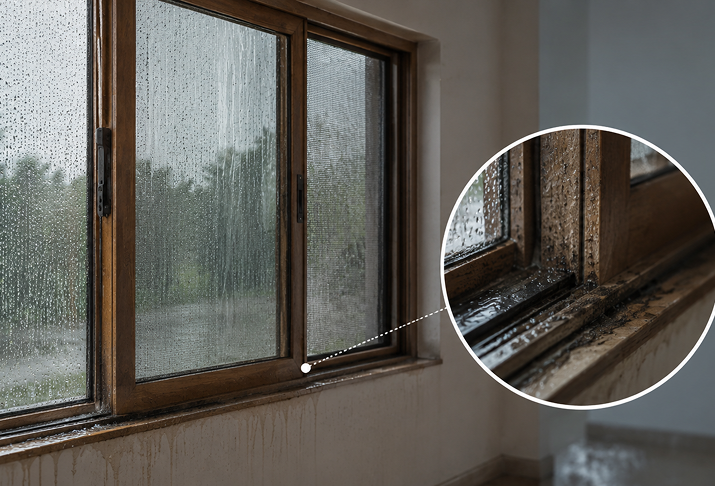
Why Does the Opening Style Matter?
Sliding doors stay within the frame plane, so furniture, planters, or balcony movement are less likely to interfere with operation. Casement doors need a clear swing zone, but they can create a more direct passage when fully open.
The opening style can also affect sealing and ventilation. Hinged systems can press the sash against perimeter seals, while sliding systems depend on tracks, overlaps, gaskets, interlocks, and drainage. Actual performance varies with system design, glass specification, fabrication quality, and installation.
Sliding Doors vs Casement Doors: Quick Comparison
|
Factor |
Sliding Doors |
Casement Doors |
|
Opening |
Slides horizontally |
Swings on side hinges |
|
Extra operating space |
Not required |
Swing clearance required |
|
Best for |
Balconies, patios, wide openings |
Entries, patios, clear access |
|
Ventilation |
Depends on openable panels |
Strong when fully open |
|
Maintenance focus |
Tracks, rollers, drainage |
Hinges, handles, seals |
|
Visual character |
Minimal, wide-glass look |
Defined hinged appearance |
What Are the Main Benefits of Sliding Doors?
Sliding doors are especially useful where space efficiency matters.
- No swing obstruction: The panel does not project into the room or balcony.
- Suitable for broad openings: Multiple moving and fixed panels can divide a large opening.
- Modern appearance: Large glazed areas can create a clean indoor-outdoor connection.
- Configuration flexibility: Windoorkrafts currently lists 2, 2.5, 3 and 4-track uPVC sliding options.
For exposed balconies, track and drainage design deserve as much attention as the frame and glass. Drainage paths and clear weep areas are especially important where wind-driven rain reaches the opening.
Read more: How High-Performance Windows Prevent Rain Seepage
What Are the Benefits of uPVC Windows for Noise Reduction?
Sliding doors are especially useful where space efficiency matters.
- No swing obstruction: The panel does not project into the room or balcony.
- Suitable for broad openings: Multiple moving and fixed panels can divide a large opening.
- Modern appearance: Large glazed areas can create a clean indoor-outdoor connection.
- Configuration flexibility: Windoorkrafts currently lists 2, 2.5, 3 and 4-track uPVC sliding options.
For exposed balconies, track and drainage design deserve as much attention as the frame and glass. Drainage paths and clear weep areas are especially important where wind-driven rain reaches the opening.
Read more: How High-Performance Windows Prevent Rain Seepage
What Are the Main Benefits of Casement Doors?
Casement doors are useful when access and airflow matter more than saving swing space.
- Clear opening: A fully opened sash does not overlap another sliding sash.
- Strong ventilation: The hinged panel can open widely.
- Flexible opening direction: Depending on the design and site, the sash can be configured to open inward or outward.
- Choice of opening widths: A single casement door suits everyday access, while a double casement design can create a broader indoor-outdoor passage.
For a related comparison of the two operating mechanisms, see Casement vs Sliding Windows: What’s the Difference?.
What Are the Challenges or Limitations?
Sliding doors need tracks and drainage paths kept clean. Dust and debris can affect smooth movement or interfere with drainage if maintenance is neglected. The clear opening also depends on the panel arrangement because some panels overlap when opened.
Casement doors require swing clearance. An outward-opening sash may interfere with a narrow balcony or walkway, while an inward-opening sash uses interior space. Hinges, handles, and locking hardware must also suit the sash dimensions and frequency of use.
In both cases, do not judge performance only by whether the frame is uPVC or aluminium. Glass, reinforcement, seals, locking hardware, sill detailing, fabrication accuracy, and installation also influence the finished door.
Which Windoorkraft Door Works Best in Different Areas?
For a compact apartment balcony, a sliding door is usually the more practical starting point because it avoids a swing arc.
For a garden or villa opening with generous clearance, a double casement door can create a broad, direct passage.
For a utility area or secondary entrance, a single casement door can provide simple everyday access. These use cases are consistent with the applications listed for Windoorkrafts’ current sliding and casement ranges.
For a large living-room opening, also compare slide-and-fold and lift-and-slide systems rather than limiting the decision to two styles. Windoorkrafts’ current product portfolio includes both alternatives, Explore the complete Windoorkrafts product range
A Practical Real-World Scenario
A common example is a Hyderabad apartment where the living room opens onto a narrow balcony with chairs, plants, or an AC outdoor unit. Because a casement sash needs swing clearance, it could reduce circulation space in this type of layout. A sliding door avoids that swing arc. This is a practical inference from how the two opening mechanisms operate.
Now consider a villa where the living room opens directly to a garden with ample exterior clearance. A double casement door may offer a broad passage between the two spaces. The better option changes because the site conditions and priorities change.
How Do You Choose the Right Door?
Step 1: Measure the Usable Opening
Record the width and height, but also check nearby walls, railings, furniture, curtains, and walking paths.
Step 2: Rank Your Priorities
Decide what matters most: space saving, clear opening, airflow, view, weather protection, security, noise control, maintenance, or budget.
Step 3: Match the Mechanism to the Site
Choose sliding when swing space is limited. Consider casement when you have adequate clearance and want a fully opening hinged panel.
Step 4: Specify the Complete System
Discuss profile series, glass, reinforcement, locks, rollers or hinges, seals, drainage, and installation. Windoorkrafts itself uses a process that includes site measurement before design and production, highlighting why opening-specific assessment matters.
Common Mistakes to Avoid
- Choosing a door only by appearance.
- Ignoring the direction in which a casement door will swing.
- Selecting a sliding door without considering track cleaning and drainage.
- Assuming all uPVC or aluminium systems perform identically.
- Focusing on glass size while overlooking hardware and locks.
- Finalising the design before proper site measurement.
FAQs
1. Which is better for a small balcony: sliding or casement doors?
Answer: Sliding doors are generally more practical for a small balcony because the panels move horizontally instead of swinging into limited space. Still, check the required clear opening, track configuration, drainage, and furniture placement before making a final decision.
2. Are casement doors better for ventilation?
Answer: Casement doors can provide strong ventilation because the hinged sash can open widely. A double casement arrangement can also create a broad opening. Actual airflow still depends on the opening size, orientation, surrounding buildings, and local wind conditions.
3. Which door is easier to maintain?
Answer: Both are manageable with routine care, but their maintenance points differ. Sliding systems require attention to tracks, rollers, and drainage paths. Casement systems require periodic checks of hinges, handles, locks, and seals.
4. Can both sliding and casement doors be used for balconies?
Yes. Both sliding and casement doors can work for balconies, but the better choice depends on available space and how the balcony is used. Sliding doors are usually preferable where swing clearance is limited, while casement doors can work well when there is enough space for the sash to open freely and a wider opening or stronger ventilation is preferred.
5. How should I compare Casement Doors Suppliers in Hyderabad?
Answer: Compare the complete specification rather than only the price per square foot. Check the profile system, reinforcement, glazing, locking hardware, hinge capacity, sealing, fabrication quality, installation method, warranty terms, and whether the supplier recommends the door after assessing your actual opening.
Conclusion
There is no single winner between sliding and casement doors. Choose sliding when your Windoorkraft priority is space efficiency, broad glazing, and easy balcony or patio operation. Choose casement when you have enough swing clearance and value a clear passage, wide opening, and hinged closing action.
Before ordering, evaluate the door as part of the room rather than as an isolated product. Proper site measurements and a clear comparison of frame, glass, hardware, drainage, sealing, and installation will help you make a more reliable long-term choice.

Pingback: Aluminium Windows Maintenance Guide for Hyderabad Homes
Pingback: 5 Trendy Window Designs to Elevate Your Living Room’s Aesthetics