uPVC Doors vs Wooden Doors: Which Is Better for Hyderabad Homes?
uPVC doors are a practical choice for Hyderabad homes as they resist heat, moisture, termites, and dust better than wood, need low maintenance, and offer strong long-term value.
For Hyderabad’s heat, dust, and termite-prone soil, uPVC doors from Windoorkrafts generally outperform wood — lower maintenance, better monsoon resistance, and stable long-term cost. Wooden doors still suit buyers prioritizing classic aesthetics over durability in premium, traditionally designed homes.
Choosing a door in Hyderabad isn’t just about looks. Between the Deccan heat, sudden monsoon downpours, red-soil termite activity, and the traffic noise of areas like Gachibowli, Kondapur, and Kukatpally, your door material has to work harder here than in most Indian cities. This guide breaks down the comparison across the questions Hyderabad homeowners actually search for — not just the generic “which is better” checklist.
What Is the Core Difference Between uPVC and Wooden Doors?
uPVC (unplasticized polyvinyl chloride) is a synthetic, steel-reinforced polymer profile, while wooden doors are crafted from natural or engineered timber. uPVC is manufactured to a fixed, weather-tested specification, so every unit performs identically regardless of climate. Wood’s performance depends heavily on the species, seasoning quality, and finish applied — which is why two wooden doors from different carpenters can age very differently in the same Hyderabad home.
Which Door Handles Hyderabad's Heat and Monsoon Swings Better?
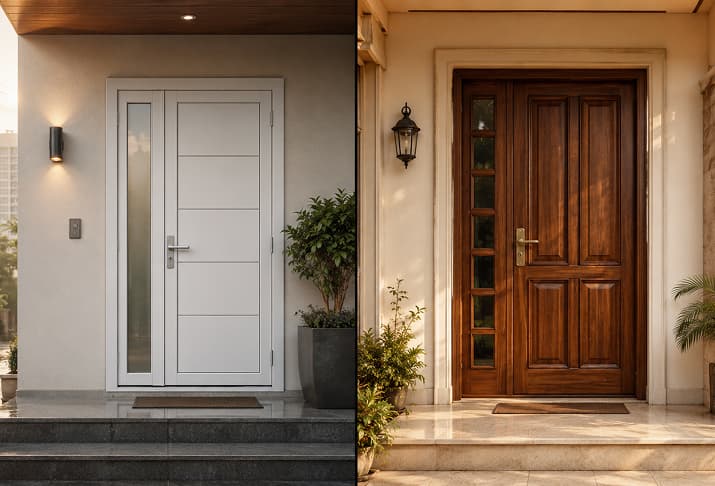
uPVC doors handle Hyderabad’s climate swings more consistently than wood. Hyderabad sees intense summer heat followed by sharp monsoon humidity, and this expansion-contraction cycle is exactly what causes wooden doors to warp, crack, or stick in their frames over a few years. uPVC’s engineered profile is designed to resist this thermal movement, so doors continue opening and closing smoothly across seasons without repainting or resealing.
Wooden doors are also strong, especially when made from high-quality solid wood. They bring a premium feel and can last for many years if maintained properly. However, wood is a natural material, so it reacts to moisture and temperature changes. In humid weather, it may expand. In dry heat, it may shrink or develop small cracks.
For Hyderabad homes, where weather changes are common, uPVC has an advantage because it stays more consistent over time. Wooden doors can still perform well, but they need regular care to maintain their shape and finish.
Do uPVC Doors Really Resist Termites Better in Telangana's Soil?
Yes — uPVC doors are termite-proof by material composition, which matters significantly in Telangana’s termite-prone red soil. Wood, even when chemically treated, remains an organic food source for termites and can require repeat treatment over its lifetime, especially for ground-floor entrances and independent houses with garden-facing doors. For homeowners who’ve dealt with termite damage before, this single factor often settles the decision in favor of uPVC.
Heat Insulation and Indoor Comfort
uPVC doors are known for good thermal insulation. Their profile structure helps reduce heat transfer, especially when the door is installed correctly. This can support better indoor comfort and may also reduce pressure on air conditioning systems.
Wooden doors also provide natural insulation, particularly when they are made from solid wood. However, if the door expands, shrinks, or develops gaps over time, its insulation performance can reduce. For homes that need better protection from heat, especially balconies, terraces, and exterior areas, uPVC performs more consistently.
Design and Appearance
uPVC doors have improved a lot in terms of appearance. Modern options are available in different colours, matte finishes, glass combinations, and wood-look textures. They can work well in apartments, villas, balconies, commercial spaces, and contemporary interiors.
If the goal is a classic, handcrafted look, wood has an advantage. If the goal is a clean, modern, durable, and flexible design, uPVC is a strong choice.
Maintenance Requirements
For everyday homes and multi-unit developments, this makes door upkeep easier to manage and less dependent on repeated service work.
Security and Strength
Wooden doors can also be very strong, especially solid wood doors. However, their long-term security depends on the condition of the frame, locks, hinges, and overall maintenance. If the wood expands, bends, or weakens, the fitting may be affected.
For consistent performance over many years, uPVC offers a dependable advantage when paired with quality hardware and professional installation.
Cost and Long-Term Value
Factor | uPVC Doors | Wooden Doors |
Initial Cost | Moderate | Moderate to High |
Maintenance | Low | Regular Upkeep Needed |
Moisture Resistance | High | Depends on Treatment |
Termite Resistance | High | Needs Protection |
Lifespan | Long | Depends on Care |
Long-Term Value | High | Moderate |
Wooden doors may look cost-effective at the beginning, depending on the type of wood used. However, polishing, repairs, termite protection, repainting, and possible replacement can increase the total cost over time.
uPVC may require a planned initial investment, but its low maintenance and long service life make it cost-efficient in the long run. For homeowners who want durable and reliable door solutions, Best uPVC doors in Hyderabad can offer strong value.
Quick Comparison: uPVC vs Wooden Doors for Hyderabad
| Factor | uPVC Doors | Wooden Doors |
|---|---|---|
| Durability & Weather Resistance | Doesn’t absorb moisture, so it won’t warp, swell, or rot even through Hyderabad’s monsoon humidity | Prone to swelling, cracking, and degradation with prolonged damp exposure |
| Maintenance | Just a wipe with soapy water — no painting, polishing, or resealing needed | Needs periodic painting, polishing, sealing, and termite treatment |
| Pest Protection | Fully immune to termites and wood borers | Vulnerable to pest damage if not treated regularly |
| Aesthetics | Modern, sleek, glossy finish — fewer color/texture options | Timeless, warm texture with full flexibility for custom paint and stains |
| Cost | Lower upfront cost, and stays lower over time with no recurring upkeep | Higher upfront cost, plus ongoing maintenance expenses add up |
Ready to Choose the Right Door for Your Hyderabad Home?
Whether you’re building new or replacing termite-damaged wooden doors, Windoorkrafts can help you compare uPVC and wooden options against your exact site conditions — climate exposure, budget, and design style. Get in touch with Windoorkrafts today for a free consultation and custom quote from a trusted uPVC doors supplier in Hyderabad, and get doors built for how this city actually weathers.