How uPVC Doors Help Keep Your Home Cooler — A Complete Guide
uPVC doors reduce heat transfer, seal gaps, block dust and noise, and help rooms stay cooler with less AC load. They are durable, low-maintenance, and ideal for Hyderabad homes.
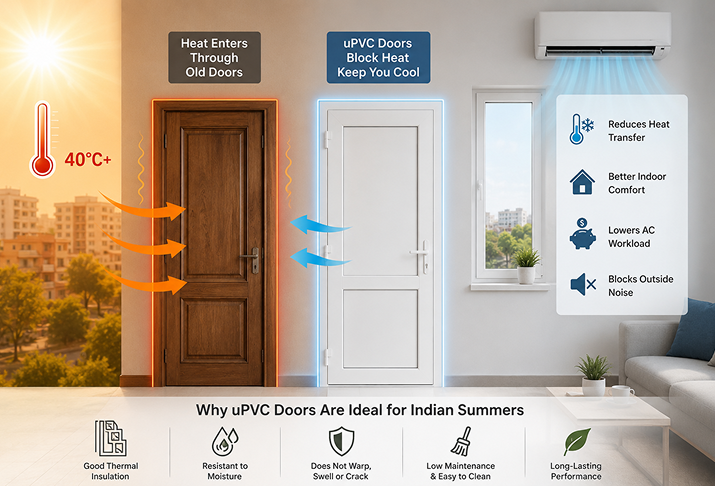
uPVC doors keep homes cooler by using multi-chambered frames that slow heat transfer, tight seals that block hot air and dust, and low heat conductivity compared to metal or wood. This reduces indoor heat gain, lowers AC load, and helps rooms stay cooler, quieter, and more energy-efficient throughout the year.
What Are uPVC Doors?
Unlike wood, uPVC does not swell, crack, or rot due to moisture. Unlike aluminium, it does not transfer heat quickly. This makes it a better option for homes that need better insulation, lower maintenance, and long-term durability.
A major reason uPVC performs well is its internal profile design. Most quality uPVC doors are made with multi-chambered sections. These chambers hold air inside the profile, and trapped air acts as a natural insulation layer. Because of this, outdoor heat takes longer to pass through the door and enter the room.
How Do uPVC Doors Keep Interiors Cooler?
uPVC doors help maintain cooler indoor temperatures through a combination of material quality, frame design, sealing, and glass options.
1. Multi-Chambered Frame Design
The frame and sash of a uPVC door usually contain several internal chambers. These hollow spaces slow down the movement of heat from outside to inside.
Instead of allowing heat to pass through one solid surface, the multi-chamber structure creates multiple barriers. This helps reduce indoor heat gain and supports a more comfortable room temperature.
2. Low Heat Conductivity
One of the biggest advantages of uPVC is that it does not conduct heat easily. Aluminium, on the other hand, transfers heat very quickly.
During peak summer afternoons, metal doors and frames can become hot and radiate that heat indoors. uPVC remains more stable and does not pass outdoor heat inside at the same speed. This makes a noticeable difference in homes exposed to direct sunlight.
3. Better Sealing Around the Door
Heat does not enter only through the door surface. It also enters through small gaps around the frame.
Good-quality uPVC doors are fitted with strong sealing systems, often using EPDM gaskets or compression seals. These seals close the tiny gaps between the door and frame, reducing the entry of hot air, dust, and noise.
A properly installed uPVC door creates a tighter boundary between the outdoor and indoor environment. This helps the room stay cooler for a longer time.
4. Double-Glazed Glass Options
Some uPVC doors come with glass panels. When these panels are double-glazed, they provide better insulation than regular single glass.
Double glazing uses two layers of glass with a sealed air or gas-filled space between them. This additional layer helps slow down heat transfer. For homes with balcony doors, patio doors, or large glass openings, this can improve comfort significantly.
5. UV-Resistant Surface
uPVC is designed to withstand sunlight and outdoor exposure. Its surface does not absorb heat in the same way as dark-painted metal or untreated wood.
This helps reduce heat buildup on the door surface and improves performance during hot weather.
Why Are uPVC Doors Useful for Indian Homes?
Indian homes deal with changing weather conditions throughout the year. Summers bring high heat, monsoons bring moisture, and urban areas often face dust and noise.
uPVC doors are useful because they address many of these problems together.
Feature | uPVC Door | Wooden Door | Aluminium Door |
Heat Insulation | Very Good | Moderate | Low |
Moisture Resistance | Very Good | Low | Good |
Maintenance | Low | High | Moderate |
Durability | Long-lasting | Depends on care | Good |
Energy Efficiency | Better | Average | Lower |
Noise Reduction | Good | Moderate | Limited |
For cities like Hyderabad, where homes face both heat and seasonal humidity, uPVC doors can be a practical long-term upgrade.
Can uPVC Doors Help Reduce Electricity Bills?
When hot air enters the room continuously, the air conditioner has to work harder to maintain the set temperature. This increases electricity usage. A well-sealed and insulated uPVC door reduces heat entry, which helps the AC cool the room more efficiently.
The savings may vary depending on the size of the room, direction of sunlight, type of glass, and installation quality. However, in many homes, better doors and windows can reduce cooling load and improve energy efficiency over time.
What Problems Do uPVC Doors Solve?
uPVC doors solve several common issues that homeowners face with traditional doors.
Warping and Swelling
Wooden doors often expand during monsoon and shrink during dry weather. This can create gaps, uneven closing, or difficulty in locking. uPVC does not absorb moisture, so it keeps its shape better across seasons.Rust and Corrosion
Steel and iron doors may rust over time, especially in humid conditions. uPVC is rust-proof, making it suitable for long-term use with minimal maintenance.Frequent Maintenance
Wooden doors need polishing, painting, termite treatment, and regular care. uPVC doors are easier to maintain. A simple wipe with a soft cloth and mild cleaning solution is usually enough.Noise Entry
The same internal chambers that help block heat also reduce sound transfer. This makes uPVC doors helpful for homes near busy roads, traffic zones, markets, or construction areas. Not every uPVC door offers the same performance. Before buying, check these important details.Profile Thickness and Chamber Count
Choose a door profile with enough thickness and multiple chambers. A 5-chamber or higher profile usually performs better for heat and sound insulation.Quality of Hardware
Locks, handles, rollers, and hinges should be strong and corrosion-resistant. Stainless steel or good-quality alloy hardware lasts longer and improves daily usability.Glass Specification
If the door has glass, ask for double glazing or low-E glass options. Low-E glass helps reflect heat and improves thermal performance.Reinforcement
Good uPVC doors often include internal galvanised steel reinforcement for strength and stability. This improves security and long-term durability.Brand and Warranty
When comparing the top uPVC brands in Hyderabad, look for lead-free profiles, warranty support, reliable installation, and proven service quality.Installation Quality
Even the best uPVC door will not perform well if it is poorly installed. Proper measurement, frame alignment, sealing, and finishing are essential for insulation and durability.Common Myths About uPVC Doors
Myth 1: uPVC Doors Look Cheap
Modern uPVC doors are available in premium finishes, wood textures, matte colours, and clean contemporary styles. They can suit apartments, villas, offices, and modern interiors without looking basic.Myth 2: uPVC Doors Are Not Strong
A good uPVC door is not just plastic. Quality systems include steel reinforcement, strong hardware, and multi-point locking options. These features improve strength and security.Myth 3: uPVC Cannot Handle Indian Heat
uPVC is made for outdoor use and can handle sunlight, heat, and rain when manufactured with quality materials. Good profiles are UV-stabilised and designed to resist fading, cracking, and weather damage.Myth 4: All uPVC Doors Are the Same
Two doors may look similar from outside but perform differently. The difference comes from profile quality, chamber design, gasket type, reinforcement, glass, and installation. Always check the technical details before making a decision.What Should You Check Before Buying?
Before finalising your uPVC door, ask these questions:
- Is the profile lead-free and certified?
- How many chambers does the profile have?
- Is the door reinforced with galvanised steel?
- What type of gasket or sealing system is used?
- Does the door support double glazing?
- What type of locking system is provided?
- Is installation handled by trained professionals?
- What warranty is offered on the profile and hardware?
Is a uPVC Door Worth the Investment?
Compared to wooden doors that need regular polishing or metal doors that may heat up and corrode, uPVC offers a more convenient solution for modern homes.
For homeowners, apartments, villas, and property projects, uPVC doors can be a smart choice because they combine comfort, durability, and low upkeep.
Final Thoughts
uPVC doors help by reducing heat transfer, sealing gaps, resisting weather damage, and improving indoor comfort. For Indian climates, especially hot cities like Hyderabad, they are a practical and long-lasting option. WindoorKrafts Hyderabad offers quality uPVC door solutions with reliable profiles, careful installation, and guidance based on your space. Whether you are building a new home or upgrading an existing one, the right uPVC door can make your interiors feel cooler, quieter, and easier to maintain