
The Benefits of UPVC Windows & Doors
uPVC windows and doors have become a preferred choice in modern homes due to their durability, insulation, and low maintenance. They effectively handle heat, rain, and noise while improving energy efficiency, comfort, and long-term performance compared to traditional materials.
uPVC windows and doors keep heat, noise, dust and rain out better than most traditional frames. They never need painting, do not rust or attract termites, and stay secure with multi-point locks. For Hyderabad’s hot summers, dusty roads and heavy monsoon, they are one of the most practical choices for homes and apartments.
The catch is that each benefit depends on the specification, not just the word “uPVC”. The glass, the steel inside the frame, the seals and the installation decide whether you get these benefits or only some of them. This guide explains which spec delivers which benefit, and when uPVC is not the right choice.
Why Most uPVC Benefit Lists Leave You Disappointed
uPVC stands for unplasticised polyvinyl chloride: a rigid, weather-resistant plastic used to make window and door frames. Search for its benefits and you will find the same list everywhere: energy-saving, soundproof, low-maintenance, secure, long-lasting.
All of these can be true. But in our work across Hyderabad, we often meet homeowners who bought “uPVC windows” and got few of them. Their rooms still heat up, traffic noise still comes in, or the frames have yellowed after a few summers.
The reason is almost always the same. uPVC is a frame material, and a frame is only part of a window. A low-cost uPVC window with single glass, thin walls and no steel inside will not perform like a well-made one. So instead of another list of promises, this guide pairs each benefit with what you need to ask for to actually get it.
Do uPVC Windows Keep Homes Cooler?
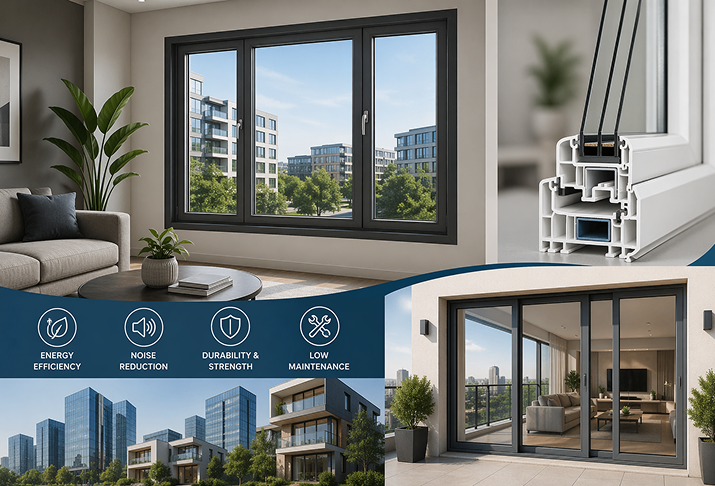
Yes. The uPVC frame itself blocks heat well, and the right glass blocks much more.
uPVC conducts very little heat, far less than aluminium or steel, and its frames have hollow internal chambers that slow heat further. On a west-facing wall in a Hyderabad May afternoon, that means a frame that stays close to room temperature instead of radiating heat inside. A tight seal also stops cooled air leaking out, so your AC does less work.
What to ask for: the glass usually covers most of the window, so pair the frame with double-glazed or heat-reflective glass on sunny walls. Single clear glass in a uPVC frame still lets in most of the sun’s heat. Read more in our guide on why uPVC suits Hyderabad summers.
Do uPVC Windows Reduce Noise?
They can make a clear difference, especially as casement windows with the right glass.
Noise enters mainly through gaps and then through glass. uPVC casement and tilt-and-turn windows close against rubber gaskets on all sides, which removes most gaps. Sliding windows always keep a small gap where the panels overlap, so they block less.
What to ask for: casement or tilt-and-turn styles for bedrooms, and laminated or double glazing with panes of different thickness for homes near main roads, flyovers or the metro. See our guide to uPVC windows for noise reduction.
Do They Keep Out Dust and Monsoon Rain?
Yes, when the seals and drainage are right.
The same gaskets that block noise also block fine construction dust. For rain, a well-designed uPVC frame has drainage channels that lead water out before it reaches the sill. uPVC does not absorb water, so it does not swell, warp or rot like wood in the monsoon.
What to ask for: visible drainage slots on the outside of the frame, and proper sealing between frame and wall. Most leaks we repair come from poor installation, not the frame.
How Much Maintenance Do uPVC Windows Need?
Very little. Wipe the frames with mild soapy water, keep tracks and drainage holes clear, and lightly oil hinges and locks once or twice a year. There is no painting or polishing, no rust as with steel, and no termite or swelling risk as with wood. Compare the two in our uPVC vs wood windows guide.
Do uPVC Frames Last in Strong Sun?
Good ones do. The risk in Hyderabad is UV light, which can yellow or weaken poor-quality profiles over time.
What to ask for: a UV-stabilised, lead-free uPVC compound made for tropical climates, and galvanised steel reinforcement inside the frame so larger windows and doors stay straight.
Are uPVC Windows and Doors Secure?
Yes, when the hardware is right. The steel inside the frame gives screws and locks something solid to hold. Multi-point locking secures the sash at several points, not just one. For ground floors and independent houses, add toughened or laminated glass.
Are uPVC Windows Safe in a Fire?
uPVC is difficult to ignite and tends to stop burning once the flame source is removed. It is not fireproof, though, and it softens at high temperatures. Treat this as a useful extra, not a reason to buy.
What Are the Benefits of uPVC Doors?
uPVC doors bring the same sealing and low upkeep to the openings that let in the most dust and noise.
- Balcony sliding doors: they keep dust and rain off the floor and, with a mesh track, keep mosquitoes out while you ventilate.
- Casement and French doors: they seal tightly for bedrooms and terraces that face busy roads.
- Utility and kitchen doors: they do not swell in damp areas, so they keep closing smoothly through the monsoon.
Benefit Checklist: What to Ask For Before You Buy
Take this table to any supplier, including us. If a quote cannot answer a row, you may not get that benefit.
Benefit you want | What the specification must include |
|---|---|
Cooler rooms | Double-glazed or heat-reflective glass on sunny walls; multi-chamber profile |
Less noise | Casement or tilt-and-turn style; laminated or double glazing |
Less dust | Full-perimeter gaskets; brush seals on any sliders |
No monsoon leaks | Drainage slots in the frame; sealed frame-to-wall joint |
No yellowing or sagging | UV-stabilised, lead-free compound; galvanised steel reinforcement |
Better security | Multi-point locks; toughened or laminated glass on ground floors |
Lasting performance | Installation by the manufacturer’s own team; written warranty on profile, hardware and fitting |
When Is uPVC Not the Best Choice?
We make both uPVC and aluminium, so we can be straight about this. uPVC is not ideal for:
- Very large glass panels or wide sliding doors. uPVC frames get bulky at large sizes. Aluminium carries big glass with slimmer frames. See our uPVC vs aluminium sliding doors comparison.
- Ultra-slim, minimal designs. If you want the thinnest possible sightlines, aluminium is the better fit.
- Very dark colours on walls in full sun. Dark finishes absorb more heat and the frame expands more, so they need the right profile and laminate. Ask before choosing one.
Are uPVC Windows and Doors Worth the Cost?
For most Hyderabad homes, yes. A well-specified uPVC window costs more than a basic aluminium or MS-steel frame, but you stop paying for painting, rust repair, swollen wooden shutters and leak fixes. The savings on AC are real on sunny walls, but they depend on the glass you choose, so do not count on them from the frame alone.
The poor-value option is a cheap uPVC window that skips the glass, steel or seals. It looks the same on day one and costs more within a few years.
Get Every Benefit You Pay For
uPVC windows and doors deliver real comfort, but only when the frame, glass, hardware and installation are chosen together.
At WindoorKrafts, we manufacture uPVC windows and doors in Hyderabad and install them with our own team. We can visit your home, check each opening’s sun, noise and size, and give you a clear, itemised quote. See our recent work on the projects page.
Book a free site visit and quote, or call 040 2988 5206 to speak with a uPVC specialist today.
Pingback: 5 Trendy Window Designs to Elevate Your Living Room’s Aesthetics
Pingback: Aluminium vs uPVC Sliding Doors: Which Is Better?