
Why Are My Sliding Windows Hard to Open During the Rainy Season?
Rainy-season sliding window stiffness is often caused by wet dirt, blocked drainage, worn rollers, or misalignment. Regular track cleaning and timely servicing help restore smooth operation.
Sliding windows often become harder to open during the rainy season because water mixes with dust and debris in the tracks, drainage holes become blocked, or rollers and guides are worn or misaligned. Rain itself should not make a correctly functioning uPVC window swell; cleaning the tracks and checking drainage and hardware usually identifies the problem.
A sliding window that operated smoothly during summer but suddenly feels heavy, jerky, or stuck during Hyderabad’s monsoon does not necessarily need replacement.
Rain can expose maintenance problems that were already developing. Dust accumulated during dry weather can turn into grime when it gets wet. Water may remain in poorly draining tracks, while worn rollers or incorrect alignment can become more noticeable once dirt builds up around moving components. Windoorkrafts specifically recommends keeping uPVC and aluminium window tracks free of dust as part of routine maintenance.
For homeowners researching Sliding Windows Suppliers in Hyderabad, smooth operation should therefore be evaluated together with track design, drainage, rollers, seals, fabrication quality, and installation—not just the appearance of the frame.
Key Takeaways
- Dirt and debris in sliding tracks are among the simplest causes of a window becoming difficult to move.
- Rain can turn accumulated dust into heavier grime that interferes with smooth sliding.
- Blocked drainage or weep holes can allow water to collect in the track. Windoorkrafts highlights clean drainage channels as important during Hyderabad’s monsoon.
- Worn or incorrectly adjusted rollers can increase resistance and may require professional adjustment or replacement.
- uPVC does not behave like untreated timber that absorbs rainwater and swells; do not automatically blame the frame material when a sliding window becomes stiff.
- Forcing a stuck sash can damage rollers, handles, locks, or guides.
Why Do Sliding Windows Become Harder to Open in the Rain?
Sliding windows operate by moving a sash horizontally along a track. Windoorkrafts’ uPVC sliding window range uses track-based configurations and is designed for smooth, space-saving operation.
Anything that increases resistance between the sash, rollers, guides, and track can make that movement more difficult.
During rainy weather, several conditions can occur at the same time:
- Dust becomes wet and sticky.
- Outdoor debris enters exposed tracks.
- Drainage paths become blocked.
- Water remains in the sill longer.
- Existing roller wear becomes more noticeable.
- Weatherstripping or guides may drag if damaged or displaced.
The rainy season may therefore reveal the problem rather than being the sole cause of it.
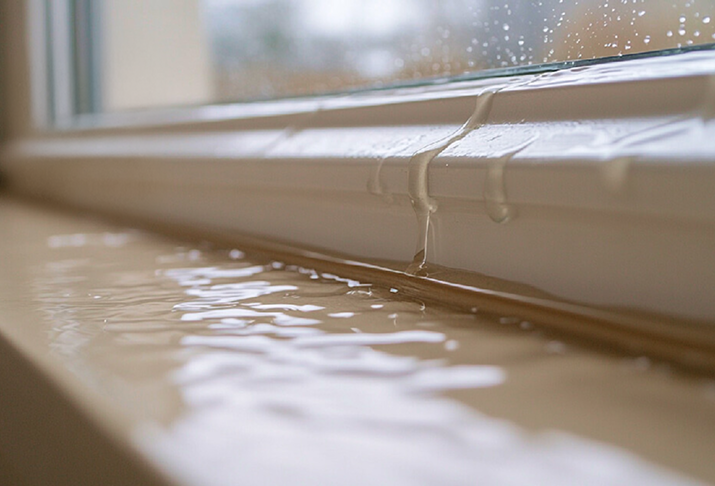
1. Are Dirty Window Tracks Causing the Problem?
Start here.
Dust, hair, insects, leaves, construction particles, and other debris gradually collect inside sliding-window tracks. Once rainwater or cleaning water mixes with this material, it can form a layer of grime.
The rollers then have to travel through that buildup instead of over a clean surface.
Major window manufacturers recommend track cleaning as an important first step when maintaining sliding systems. Andersen advises removing dirt and debris from sill tracks using a soft brush and mild soapy water, while Milgard notes that dirty tracks can make sliding units stick or become difficult to open.
Windoorkrafts similarly recommends keeping uPVC and aluminium tracks free from dust.
Related Article, How to Care for Your uPVC and Aluminium Windows
2. Are the Drainage Holes Blocked?
Sliding-window tracks are not necessarily designed to remain completely dry during every rainstorm.
A well-designed sliding system may allow limited water into designated outer track areas and then direct that water outside through drainage channels or weep holes.
Windoorkrafts notes that sliding-window tracks should have properly designed weep holes and drainage channels to manage rainwater. When those channels are not cleaned regularly, water can back up.
If a drainage opening becomes blocked by dirt or debris, water can remain in the track longer than intended.
The combination of standing water and dirt can make the track dirty and interfere with smooth operation.
Related Article, Do Sliding Windows Leak During Monsoon? Causes & Prevention
3. Could the Rollers Be Worn or Misaligned?
Cleaning will not solve every stiff window.
Horizontal sliding windows may use rollers or similar moving components to help support and move the sash. Those components can eventually require adjustment.
Milgard’s maintenance guidance specifically states that sliding-window rollers may occasionally need adjustment to maintain smooth operation and that rollers can be adjusted or replaced to improve operability.
Possible roller-related warning signs include:
- The sash feels unusually heavy.
- One side moves more easily than the other.
- The window tilts slightly while sliding.
- You hear scraping or grinding.
- Cleaning the track makes little difference.
- The window has progressively become harder to operate.
If these symptoms remain after basic cleaning, hardware inspection is a better next step than repeatedly forcing the sash.
4. Can Window Alignment Make Sliding Difficult?
Yes.
A sliding sash needs to remain correctly positioned relative to its track, frame, guides, rollers, and locking hardware.
If the sash or hardware moves out of adjustment, one part can start rubbing against the track or frame. Roller adjustment is one recognised method of restoring smooth operation in horizontal sliding windows when the roller setting is the cause.
Alignment issues may also become apparent when the window:
- Does not close evenly.
- Requires lifting before it will slide.
- Rubs at one corner.
- Does not engage the lock smoothly.
- Leaves an uneven gap around the sash.
Professional inspection is appropriate when the sash appears physically out of position.
5. Do uPVC Windows Swell During Rain?
This is a common misconception.
Traditional wood can absorb moisture if it is inadequately protected, potentially contributing to dimensional changes.
uPVC window frames, however, are non-porous and designed as low-maintenance, weather-resistant systems. Windoorkrafts describes both uPVC and aluminium frame surfaces as non-porous, meaning dirt remains primarily on the surface rather than soaking into the material.
So if a uPVC sliding window becomes difficult during monsoon, do not automatically assume the frame has absorbed rainwater and swollen.
Check the track, debris, drainage, rollers, guides, seals, and sash alignment first.
6. Can Weather Seals Make the Window Feel Stiff?
Weatherstripping and seals help control air, dust, and water around a sliding window.
Windoorkrafts’ sliding systems use sash overlap and sealing features as part of their performance design.
A correctly positioned seal should not make a window excessively difficult to operate. However, worn, damaged, dirty, or displaced weatherstripping may create additional friction.
If the window moves normally through most of the track but becomes difficult near the fully closed position, inspect the seal and locking area as well as the rollers.
How Can You Identify What Is Making Your Window Stick?
Use the behaviour of the window as an initial clue.
Symptom | Possible Cause |
Window becomes stiff mainly after rain | Wet dirt or track contamination |
Water remains in bottom track | Blocked drainage/weep holes |
Window feels heavy all the time | Roller or hardware issue |
One side drags | Alignment or roller adjustment |
Scraping sound | Debris, guides, rollers, or alignment |
Window sticks near closed position | Seal or locking alignment |
Problem remains after cleaning | Hardware or installation issue |
These are diagnostic clues rather than definitive diagnoses. More than one condition can occur at the same time.
How Do You Fix a Sliding Window That Is Hard to Open?
Step 1: Do Not Force It
Avoid repeatedly pulling hard on the handle.
Excessive force can transfer stress to locks, handles, rollers, guides, and other components.
Step 2: Inspect the Track
Open the sash as far as it will move comfortably and look for:
- Mud
- Dust
- Leaves
- Hair
- Insects
- Small stones
- Construction debris
Remove loose debris carefully.
Step 3: Clean the Track
Use a soft brush or vacuum first.
The track can then be cleaned using mild soapy water where appropriate and dried thoroughly. Andersen recommends a soft-bristle brush and mild soapy water for dirt deposits on gliding tracks.
Avoid abrasive tools that may damage the track surface.
Step 4: Check the Drainage Openings
Locate the designed drainage or weep openings and ensure they are not clogged.
Do not seal these openings because you assume they are gaps. Windoorkrafts identifies drainage channels and weep holes as part of sliding-window rainwater management.
Related Article, Best uPVC Windows for Monsoon Season in Hyderabad
Step 5: Test the Window Again
Once the track is clean and dry, move the sash gently.
If operation improves significantly, track contamination was probably contributing to the problem.
Step 6: Have the Rollers and Alignment Checked
If the window remains heavy, uneven, or noisy, the rollers or alignment may require adjustment.
Window manufacturers provide specific roller-adjustment procedures for their individual systems, which is why hardware adjustment should follow the requirements of the installed product rather than a generic DIY method.
Should You Lubricate Sliding Window Tracks?
Do not automatically pour household oil, grease, or another lubricant into the window track.
Different window systems have different maintenance requirements. Some manufacturers specify particular dry or silicone-based lubricants for designated components, while others may have different instructions. Using a sticky lubricant can also attract more dust if it is unsuitable for the system.
Follow the window manufacturer’s maintenance guidance or ask the installer which lubricant, if any, is appropriate.
The safer universal starting point is clean first, diagnose second, lubricate only where the product specification recommends it.
How Can You Prevent Sliding Windows From Sticking During Monsoon?
A short pre-monsoon maintenance routine can prevent many problems.
Before the Rainy Season
- Vacuum loose dirt from the tracks.
- Wipe the frame and track.
- Check drainage holes.
- Open and close every sash.
- Check whether locks operate smoothly.
- Inspect visible weather seals.
- Arrange service if a sash is already dragging.
During Monsoon
Check exposed sliding windows after periods of heavy rain.
If dirt or standing water has accumulated, clean the area rather than allowing layers of grime to build up throughout the season.
Windoorkrafts recommends routine track cleaning and drainage maintenance for sliding windows in Hyderabad’s monsoon conditions.
A Practical Hyderabad Example
Consider a balcony sliding window facing a dusty road.
Throughout summer, fine dust gradually accumulates in the lower track, but the window continues to operate reasonably well.
When the monsoon begins, rainwater reaches the outer track and mixes with the accumulated dust. The dry powder becomes heavier grime around the track and drainage openings. Suddenly, the homeowner feels that the sash has become much harder to move.
In this example, the rain did not cause the uPVC frame to swell. It exposed a track-maintenance issue.
This is an illustrative scenario rather than a specific Windoorkrafts customer case, but it explains why cleaning before monsoon can make a significant practical difference.
Common Mistakes to Avoid
Forcing the window: A stiff sash is a symptom that should be investigated.
Using random oil or grease: Use only maintenance products suitable for the installed system.
Sealing drainage holes: Weep holes may be intentional parts of the rainwater-management system.
Cleaning only the visible frame: The lower track and corners require attention too.
Assuming rain has swollen the uPVC: Start by examining dirt, drainage, rollers, seals, and alignment.
Ignoring gradual stiffness: A window that is becoming progressively harder to move may require roller or hardware adjustment rather than another round of cleaning.
Frequently Asked Questions
Why does my sliding window become stiff only when it rains?
Answer: Water may mix with accumulated dust and debris in the track, creating additional resistance. Blocked drainage can also leave water and grime in the sill. Clean and dry the tracks, check the drainage openings, and see whether operation improves.
Can rain cause a uPVC window frame to swell?
Answer: uPVC is a non-porous window-frame material, so a stiff uPVC slider should not automatically be diagnosed as a moisture-swollen frame. Track contamination, drainage, rollers, weatherstripping, and alignment are more useful areas to inspect first.
How often should sliding-window tracks be cleaned?
Answer: There is no single schedule suitable for every property. Inspect and clean them whenever visible dirt accumulates, with extra attention before and during monsoon or in dusty locations. Windoorkrafts recommends keeping tracks free from dust as part of routine maintenance.
Why is my window still difficult to open after cleaning?
Answer: If a clean track does not solve the problem, worn or poorly adjusted rollers, guides, seals, locking hardware, or sash alignment may be responsible. Rollers on horizontal sliding windows can sometimes require adjustment or replacement to restore smooth operation.
Should I replace a sliding window that keeps getting stuck?
Answer: Not immediately. Start with cleaning, drainage inspection, and a hardware check. If the window repeatedly binds because of damaged components, poor alignment, or a system that can no longer be serviced reliably, replacement can then be evaluated. When comparing replacements or Windows Suppliers in Hyderabad, consider operation, drainage, sealing, hardware, installation quality, and the conditions around the actual opening.
Conclusion
If your sliding window becomes hard to open during Hyderabad’s rainy season, rain is usually a clue—not the complete diagnosis.
Start with the simplest explanation: inspect the track for wet dirt and debris and make sure the drainage openings are clear. If the problem remains, check rollers, guides, seals, locking alignment, and sash positioning.
Windoorkraft uPVC sliding windows are designed for smooth horizontal operation and require relatively limited maintenance, but even a good sliding system performs better when tracks and drainage paths are kept clean.
Do not force a sticking sash or automatically assume the uPVC frame has swollen. Find the source of the friction first.
If cleaning and basic inspection do not restore smooth movement, professional servicing can determine whether adjustment, hardware replacement, installation correction, or eventually window replacement is the appropriate solution.

Pingback: Aluminium Windows Maintenance Guide for Hyderabad Homes
Pingback: uPVC Sliding Window Cost Hyderabad | Windoorkraft